
Apamea indocilis
Walker, 1856
ignorant apamea, ignorant apamea moth
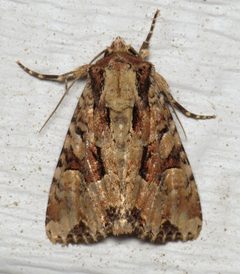
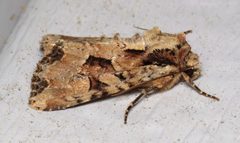
Apamea indocilis, commonly known as the ignorant apamea, is a noctuid native to North America. It belongs to the Apamea, a group of cutworm moths known for being taxonomically challenging due to individual variation and overlapping morphological traits among . The species has been documented across a broad geographic range spanning southern Canada and the northern United States, with records from Newfoundland to South Carolina in the east and westward to the Rocky Mountains and Pacific coast.
Pronunciation
How to pronounce Apamea indocilis: /əˈpeɪmiə ɪnˈdəsɪlɪs/
These audio files are automatically generated. While they are not always 100% accurate, they are a good starting point.
Identification
Identification of Apamea indocilis is complicated by the well-documented difficulty of distinguishing among Apamea . The is characterized by high individual variation within species and substantial overlap in wing patterns and coloration with . Forewing length of 15–19 mm provides a measurable character, but reliable identification likely requires examination of genitalia or other subtle morphological features not specified in available sources. The species is part of a complex that includes the yellowheaded (Apamea amputatrix) and other similar .
Images
Distribution
Native to North America. Distributed throughout southern Canada (including Alberta, Manitoba, and Saskatchewan) and the northern United States. Eastern range extends from Newfoundland to South Carolina. Western distribution reaches as far south as San Francisco Bay and southward in the Rocky Mountains to New Mexico.
Similar Taxa
- Apamea amputatrixBoth belong to the taxonomically challenging Apamea, sharing similar size range, general , and cryptic wing patterns that make visual differentiation difficult without detailed examination.
- Other Apamea speciesThe as a whole exhibits extensive morphological overlap among , with individual variation further complicating identification; many Apamea species require genitalic dissection or molecular methods for reliable determination.
More Details
Taxonomic history
Originally described as Xylophasia indocilis by Walker in 1856, later transferred to the Apamea.
Observation frequency
As of the source date, 88 observations recorded on iNaturalist, suggesting it is encountered with moderate frequency by naturalists but may be underreported due to identification challenges.