
Apamea niveivenosa
Grote, 1879
Snowy-veined Apamea Moth
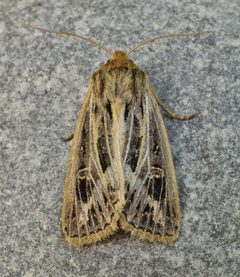
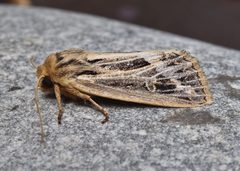
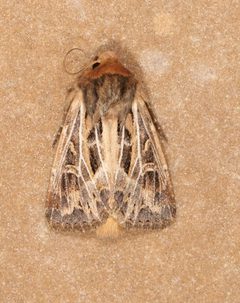
Apamea niveivenosa, known as the snowy-veined apamea, is a noctuid native to northern North America. The was first described by Grote in 1879. Its larvae are subterranean cutworms that feed on grasses and have been documented as pests of grain crops in interior North America. The species occurs across Canada and extends south to California.
Pronunciation
How to pronounce Apamea niveivenosa: /əˈpeɪmiə ˌnaɪviːvəˈnoʊsə/
These audio files are automatically generated. While they are not always 100% accurate, they are a good starting point.
Identification
The specific epithet 'niveivenosa' (Latin for 'snowy-veined') suggests distinctive pale or white venation on the wings, though detailed diagnostic features distinguishing it from other Apamea are not documented in available sources. As with many Apamea species, identification is challenging due to individual variation and overlapping morphological traits with .
Images
Habitat
Associated with grassland and prairie where larval grasses occur. have been attracted to light stations in mixed grassland settings with nearby wetlands and cottonwood groves.
Distribution
Native to northern North America. Documented across Canada including Alberta, Manitoba, and Saskatchewan, with range extending south to California.
Diet
Larvae feed on grasses. Documented as a pest of grain crops in interior North America, indicating feeding on cultivated cereals.
Host Associations
- grasses - larval food plantgeneral grass feeders
Life Cycle
Larvae are subterranean cutworms, living below ground while feeding on plants. Complete with , larva, pupa, and stages; specific timing not documented.
Behavior
are and attracted to artificial light sources. Larvae exhibit subterranean feeding , remaining below ground while consuming plant roots or basal tissues.
Ecological Role
Larvae function as herbivores in grassland . As subterranean feeders, they contribute to soil nutrient cycling and may influence grass composition. Pest status in agricultural systems indicates potential economic impact in grain-producing regions.
Human Relevance
Recognized as a pest of grain crops in interior North America. The subterranean habit causes damage to cereal crops, though specific economic impact data is not available.
Similar Taxa
- Apamea amputatrixAnother Apamea cutworm moth with similar and ; both are difficult to distinguish visually and require careful examination for identification
- Other Apamea speciesThe Apamea contains numerous similar-appearing with overlapping ranges and morphological variation, making field identification challenging without detailed examination
More Details
Subspecies
Two recognized: Apamea niveivenosa niveivenosa (nominate) and Apamea niveivenosa obscuroides Poole, 1989