
Apamea acera
Smith, 1900
Pronunciation
How to pronounce Apamea acera: /əˈpeɪ.mi.ə əˈsɪrə/
These audio files are automatically generated. While they are not always 100% accurate, they are a good starting point.
Identification
Members of the Apamea are notoriously difficult to identify due to substantial individual variation and extensive overlap in wing patterns among . Positive identification of A. acera likely requires examination of genitalic characters or detailed comparison with closely related western North American Apamea species. The species may be distinguished from sympatric Apamea by subtle differences in forewing maculation, though published diagnostic characters are limited.
Images
Appearance
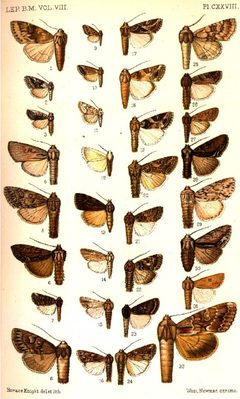
Wingspan approximately 46 mm. As a member of the Apamea, the exhibits the general body plan typical of cutworm moths: stout-bodied with cryptically patterned forewings that provide camouflage against bark or leaf litter substrates.
Habitat
Specific associations are not documented for this . Based on its western North American distribution, it likely occurs in montane and foothill environments within the documented range.
Distribution
Native to western North America. Documented from British Columbia south to California and east to Utah.
Similar Taxa
- Apamea amputatrixBoth are western North American Apamea with similar cryptic forewing patterns and body size; distinguished by subtle differences in maculation and genitalic structure
- Other Apamea speciesThe contains numerous cryptic with overlapping ranges and similar ; reliable identification requires specialized technical examination