
Schinia rivulosa
Guenée, 1852
Ragweed Flower Moth
Schinia rivulosa, the ragweed flower moth, is a small noctuid found across much of North America. It is , with one per year, and is tightly associated with ragweed (Ambrosia) as a larval . are active from July to October and are often observed visiting flowers for nectar.
Pronunciation
How to pronounce Schinia rivulosa: /ˈskiː.ni.ə rɪˈvjuː.lə.sə/
These audio files are automatically generated. While they are not always 100% accurate, they are a good starting point.
Identification
The can be distinguished from other Schinia by its association with Ambrosia plants and its specific period. The Schinia contains over 120 North American species, many with similar flower-mimicking coloration; accurate identification often requires examination of genitalia or confirmation of host plant association.
Images
Appearance
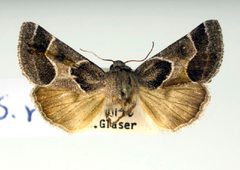
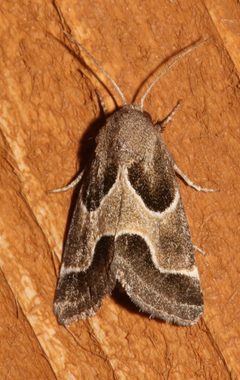
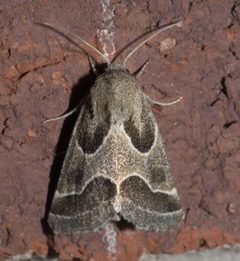
have a wingspan of 25–31 mm. The exhibits the colorful patterning typical of the Schinia, with wing coloration that provides camouflage against the flowers of its plants.
Habitat
Found in open where ragweed (Ambrosia) grows, including prairies, fields, roadsides, and disturbed areas. The 's distribution closely tracks that of its larval plants.
Distribution
North America, from Quebec to Florida, west to Arizona, north to Oregon and North Dakota. Present in Vermont according to distribution records.
Seasonality
fly from July to October depending on location, with peak activity varying by latitude. There is one per year.
Diet
Larvae feed on Ambrosia (ragweed), consuming flowers and later seed pods. have been observed visiting flowers for nectar.
Host Associations
- Ambrosia - larval larvae feed on flowers and seed pods
Life Cycle
(one per year). Larvae develop on Ambrosia plants, feeding on flowers and seed pods. occurs in the soil. emerge in mid-to-late summer and are active through autumn.
Behavior
are and attracted to light. They visit flowers for nectar and rest on blossoms where their coloration provides camouflage. The is part of a known for flower-mimicking appearance that aids in avoiding while feeding or resting on flowers.
Ecological Role
As a herbivore on Ambrosia, the contributes to natural control of ragweed . The larvae are flower and seed , potentially limiting ragweed . serve as when visiting flowers for nectar.
Human Relevance
The has no direct economic importance, though its larval feeding on ragweed could be viewed as beneficial given ragweed's status as a major allergen source for humans. The species is of interest to lepidopterists and naturalists.
Similar Taxa
- Other Schinia speciesOver 120 in North America with similar size, flower-associated , and colorful wing patterns; many require dissection or plant confirmation for reliable identification
- Schinia jaguarinaAnother flower moth in the same with similar flower-visiting , but associated with different plants (Dalea, Petalostemon)
More Details
Sources and further reading
- BugGuide
- Wikipedia
- GBIF taxonomy match
- iNaturalist taxon
- NCBI Taxonomy
- Catalogue of Life
- Bug Eric: Wasp Wednesday: Not Wasp VIII
- Catch a Glimpse of Caterpillars During National Moth Week
- Bug Eric: White Prairie Clover: An Awesome Blossom
- Bug Eric: Remembering National Moth Week 2018
- Bug Eric: October 2018
- 2013 Oklahoma Collecting Trip iReport | Beetles In The Bush