
Scythris eboracensis
(Zeller, 1855)
flower moth
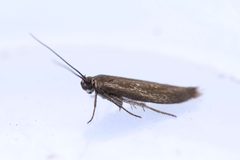
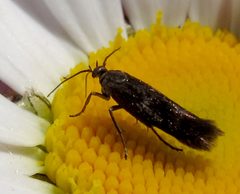
Scythris eboracensis is a minute in the Scythrididae, commonly known as flower moths. The was described by Zeller in 1855 and occurs in the Canadian prairies. are among the smallest Lepidoptera, with a body length of approximately 4–5 mm. They have been observed resting on and moving among the flowers of composite shrubs, particularly in dry, open . The of this species has not been formally documented, though related species in the are known to have larvae that feed internally on Asteraceae.
Pronunciation
How to pronounce Scythris eboracensis: //ˈsɪθrɪs ˌɛbɔːrəˈsɛnsɪs//
These audio files are automatically generated. While they are not always 100% accurate, they are a good starting point.
Identification
Distinguishing S. eboracensis from requires examination of genitalia; external is insufficient for -level identification in this . The combination of minute size (4–5 mm), slender body form, and association with composite flowers in the northern Great Plains region may help narrow possibilities. Similar species include Scythris mixaula, which is abundant in western states but not known from the Great Basin and is associated with cactus rather than composites.
Images
Appearance
are extremely small with a total body length of 4–5 mm. The body is slender and elongate, giving a 'sliver-like' appearance. Coloration is subdued, with narrow wings held tightly against the body at rest. The overall form is characteristic of microlepidoptera in the Scythrididae.
Habitat
Dry, open including prairie and semi-arid shrublands. have been found on flowering composite shrubs in clay bank environments with sparse vegetation.
Distribution
Recorded from the Canadian prairie provinces: Alberta, Manitoba, and Saskatchewan. The likely occurs in adjacent northern Great Plains regions of the United States, though records are sparse.
Seasonality
have been observed in September. Specific period is poorly documented.
Host Associations
- Gutierrezia sarothrae - visitationObserved on flowers; larval association unknown
Behavior
are active on flowers during daylight hours, moving quickly among small yellow composite flowers. They exhibit a nervous disposition, making observation and photography difficult. They rest with wings held tightly against the body, contributing to their 'sliver-like' appearance.
Similar Taxa
- Scythris mixaulaSimilar minute size and general appearance; distinguished by geographic distribution (western states, not Great Basin) and larval (cactus vs. composites)
- Neoscythris spp.Convergent small size and flower-associated ; requires genital dissection for definitive separation
- Landryia spp.Similar size and ; distinguished by strikingly asymmetrical genitalia in males
More Details
Taxonomic uncertainty
The Scythris contains dozens of in North America, most of which remain undescribed. Powell (2009) noted that most Scythris-group genera have 4–6 described species but dozens known from collections awaiting formal description. Identification to species level typically requires examination of genitalia by a .
Family placement
The -level classification of Scythrididae has been contentious. Sources vary in treating Scythrididae as a distinct family or as Scythridinae within Xyloryctidae. Current consensus (Microleps.org, Photographers Group, Catalogue of Life) treats it as family Scythrididae within Gelechioidea.