
Landryia
Kemal & Koçak, 2006
Species Guides
3Landryia is a of tiny in the Scythrididae, described by Kemal & Koçak in 2006. These microlepidopterans are among the smallest moths, with individuals measuring approximately 4–5 mm in total length. The genus is characterized by strikingly asymmetrical genitalia, a feature that distinguishes it from related genera such as Scythris and Neoscythris. in this group are poorly known taxonomically, with many undescribed species likely awaiting formal description.
Pronunciation
How to pronounce Landryia: /lænˈdɹiːə/
These audio files are automatically generated. While they are not always 100% accurate, they are a good starting point.
Identification
Distinguished from similar Scythris and Neoscythris primarily by genitalic : males possess strikingly asymmetrical genitalia. External morphology alone is insufficient for reliable identification to genus; dissection and examination of genitalia are required for definitive determination. Visual similarity to other scythridid flower moths necessitates expert verification.
Images
Appearance
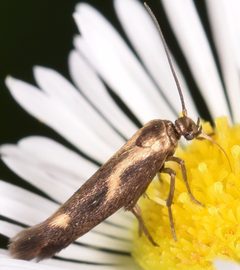
Extremely small with to elytral apex length of 4–5 mm. Body slender and delicate, appearing as tiny slivers when at rest. Wing patterns and coloration not well documented in available sources.
Habitat
Associated with flowering vegetation in open, dry . Observed on composite shrubs (Asteraceae) with small yellow flowers in prairie environments. Clay bank embankments in semi-arid regions appear to provide suitable conditions.
Distribution
Recorded from the western United States, including Nebraska (Pine Ridge escarpment region) and Vermont. Distribution likely broader but undersampled due to small size and limited collecting effort focused on microlepidopterans.
Seasonality
active in fall (September), based on observation records from Nebraska in early September 2010.
Host Associations
- Gutierrezia sarothrae - observed onbroom snakeweed, a composite shrub with small yellow flowers
- Asteraceae - likely association-level association inferred from observation on composite flowers; feeding unconfirmed for this
Behavior
observed actively moving about on flowers during daylight hours. Display nervous disposition, making close approach and photography difficult. Strong capability relative to size, though easily disrupted by wind.
Ecological Role
Presumed of small-flowered composites given association with blossoms; specific ecological functions undocumented.
Human Relevance
Of interest to microlepidopterists and photographers due to extremely small size and taxonomic uncertainty. Representative of understudied insect diversity that often goes unnoticed in general collecting.
Similar Taxa
- ScythrisSimilar size, (flower moths), and general appearance; distinguished by symmetrical male genitalia and different genitalic architecture
- NeoscythrisComparable and ; requires genitalic dissection for separation from Landryia
More Details
Taxonomic Status
The Landryia was erected in 2006, making it a relatively recent addition to the scythridid fauna. Most in this and related genera remain undescribed; Powell (in his 2009 treatment of western ) noted that while dozens of species are known in collections, only 4–6 are formally described per genus. The specimen photographed in Nebraska may represent an undescribed species.
Systematic Position
placement varies among sources: treated as Scythrididae by Microleps.org and Photographers Group, but as Scythridinae of family Xyloryctidae by BugGuide.net and Tree of Life. The is accepted in Scythrididae by GBIF and NCBI.