
Neoscythris
Landry, 1991
Species Guides
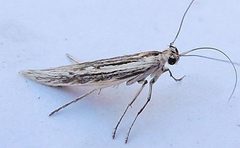
1Neoscythris is a of microlepidopteran in the Scythrididae, established by Landry in 1991. The genus contains at least four described found in North America. These moths are among the smallest in their family, with typically measuring 4–5 mm in length. They are commonly referred to as 'flower moths' due to their frequent association with flowering plants.
Pronunciation
How to pronounce Neoscythris: //niː.oʊˈsɪθ.rɪs//
These audio files are automatically generated. While they are not always 100% accurate, they are a good starting point.
Identification
Distinguished from the related Scythris by genitalic characters and subtle external ; definitive identification requires examination of genitalia. Distinguished from Landryia by symmetrical (rather than strikingly asymmetrical) genitalia. Externally similar to other scythridid genera; accurate identification to genus level typically requires dissection and microscopic examination.
Images
Habitat
Associated with dry, open including prairie and grassland environments. have been observed on flowering shrubs, particularly composites (Asteraceae), in clay bank and escarpment environments.
Distribution
North America; recorded from western and central United States including South Dakota, Nebraska, and western states.
Seasonality
active in late summer and early fall; observed in September in Nebraska.
Host Associations
- Gutierrezia sarothrae - flower visitation observed on flowers of this composite shrub.
Behavior
are or and frequently visit flowers. They exhibit a nervous disposition and are easily disturbed when approached. Strong fliers for their size, capable of rapid, darting movements.
Ecological Role
Likely contributes to pollination of composite flowers through flower visitation. Larval poorly known; related scythridids include leaf miners on Asteraceae.
Human Relevance
Of interest to microlepidopterists and photographers due to extremely small size and challenging nature of field observation. No known economic importance.
Similar Taxa
More Details
Taxonomic Status
The was established by Landry in 1991. Powell (2001) noted that most genera in this group have dozens of known from collections but only 4–6 formally described, suggesting substantial undescribed diversity.
Identification Challenges
Field identification to is generally not possible; many species remain undescribed or are distinguishable only by genital dissection.