
Scythris
Hübner, 1825
flower moths
Species Guides
10- Scythris basilaris
- Scythris eboracensis(flower moth)
- Scythris fuscicomella(flower moth)
- Scythris immaculatella
- Scythris inornatella
- Scythris inspersella(Norfolk owlet)
- Scythris limbella(Chenopodium Scythris Moth)
- Scythris mixaula
- Scythris sinensis
Scythris is a of microlepidopteran erected by Jacob Hübner in 1825. It is the type genus of the Scythrididae (flower moths), though this family has been treated variously as a of Xyloryctidae or merged into Oecophoridae by different authorities. The genus contains the largest number of in its family, with new species continuing to be described. Many species remain poorly known, with determined for relatively few.
Pronunciation
How to pronounce Scythris: /ˈsɪθrɪs/
These audio files are automatically generated. While they are not always 100% accurate, they are a good starting point.
Identification
Scythris are distinguished from other scythridid (such as Neoscythris and Landryia) primarily by genitalic characters, which require dissection and microscopic examination. The genus is characterized by symmetrical male genitalia in contrast to the strikingly asymmetrical genitalia of Landryia. External is highly conservative across species, making field identification to species level generally impossible without knowledge and reference to .
Images
Appearance
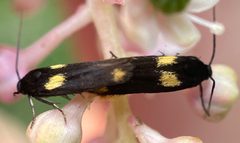
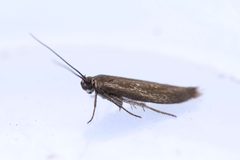
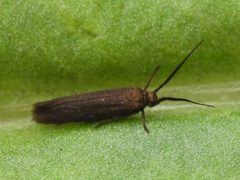
are extremely small , with total body length typically 4–5 mm and forewing length around 11–13.5 mm in the few measured . Wings are narrow and elongated. Coloration varies: some species have dark olive-greenish brown forewings with darker hindwings; others display characteristic yellow patches on the forewing in certain . The overall impression is of tiny, slender, inconspicuous moths.
Habitat
are diverse and include: thermophilous woodland fringes; dry and semi-dry closed grasslands; semi-natural road verges, embankments and flood-control dams; large parks and gardens with surviving native vegetation; arable land with fine soil under low-intensity agriculture; fine soil vineyards and orchards; sand, clay and gravel quarries; bare loess cliffs; former goose grazing land; and cemeteries. Elevational range spans lowland, colline, and submontane zones. One has been found at high altitude in the Alps, possibly representing a relict .
Distribution
Widespread across the Palearctic region. Documented from: Ukraine (type locality of S. buszkoi), Poland, Slovakia, Austria, Hungary (where S. buszkoi is widespread), Spain, Morocco, Switzerland (Alps of Valais), and China (implied by specific epithet of S. sinensis). Absent from southern and western Europe for at least some . The is unknown outside the Palearctic based on current records, though this likely reflects limited sampling rather than true absence.
Seasonality
periods vary by and latitude. Scythris buszkoi has two : first from late April to June, second from July to mid-September. Scythris siccella has one generation from end of May to end of July. Scythris sinensis is generally in Hungary, with a possible third partial generation in southern, warmer areas. of most observed species are primarily .
Life Cycle
are known for relatively few . Known patterns include: laid singly or in small groups; larval development in 12–15 days for summer ; pupal stage 7–10 days for summer generation; as pupa in white cocoon near plant. Larvae construct various shelters: loose tubular webs near leaf stalks, sand-covered silken tubes attached to food plants, or dense cocoons encrusted with sand grains for .
Behavior
are primarily and most active in late morning and early afternoon hours. During cloudy weather they rest on undersides of leaves. They also come to light in the evening and at night, indicating some / activity. Adults fly around plants during the day. Larvae exhibit diverse feeding including leaf mining, stem boring, and feeding in loose webs on leaves.
Similar Taxa
- NeoscythrisAnother scythridid of similar size and appearance; distinguished by genitalic characters requiring dissection
- LandryiaScythridid with strikingly asymmetrical male genitalia, contrasting with the symmetrical genitalia of Scythris
More Details
Taxonomic uncertainty
The may not be fully monophyletic with regard to some very small or genera placed in the same . have been divided among several groups of uncertain monophyly, with many species incertae sedis. Powell notes that most scythridid genera have dozens or more species known but only 4–6 currently described per genus, indicating substantial undescribed diversity.
Photographic challenge
Due to their minute size (4–5 mm), nervous disposition, and typical occurrence in windy open , these present significant difficulty for field photography. Successful images typically require macro equipment with substantial magnification (e.g., 1–5X) and high-speed flash to freeze motion.
Sources and further reading
- BugGuide
- Wikipedia
- iNaturalist taxon
- NCBI Taxonomy
- Catalogue of Life
- Tiny little slivers of life | Beetles In The Bush
- A Scythris buszkoi Baran, 2004 elterjedése és biológiája a Pannon régióban (Lepidoptera: Scythrididae)
- Life history and description of the preimaginal stages of <i>Scythris siccella</i> (Zeller, 1839) (Lepidoptera: Scythrididae)
- The preimaginal stages and bionomics of Scythris sinensis (Felder and Rogenhofer, 1875) (Lepidoptera, Scythrididae), a Borer in Chenopodium album L. (Chenopodiaceae)
- Description of a new species of Scythris Hübner, 1825 (Lepidoptera: Scythrididae) from central Spain
- Scythris sinensis (Felder & Rogenhofer, 1775) - the first record in Poland, and some new regional records of Scythrididae (Lepidoptera)
- Records of interesting scythridids from Morocco, with description of <i>Scythris scutulella</i> Nupponen, sp. n. (Lepidoptera: Scythrididae)
- Remarkable discovery of the Atlanto-Mediterranean moth Scythris ventosella Chrétien, 1907 at high altitude in the Alps of Valais, Switzerland – a possible relict of the late-glacial steppe-belt fauna? (Lepidoptera, Scythrididae)