
Scythrididae
Rebel, 1901
flower moths
Genus Guides
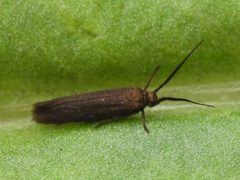
6(flower ) is a of small moths in the superfamily Gelechioidea. are small to mid-sized and appear teardrop-shaped when at rest. The family contains numerous , many of which remain undescribed—some have dozens of known species but only 4-6 formally described. Taxonomic placement has been debated: Scythrididae has been treated as a Scythridinae of Xyloryctidae, and Xyloryctidae itself has sometimes been placed within Oecophoridae. The family is distributed across multiple continents with records from Europe, Africa, Central Asia, and North America.
Pronunciation
How to pronounce Scythrididae: /sɪˈθɹɪdɪdiː/
These audio files are automatically generated. While they are not always 100% accurate, they are a good starting point.
Identification
Distinguished from other Gelechioidea by the combination of small size and teardrop-shaped resting posture. Separation from similar (Oecophoridae, Xyloryctidae) requires examination of genitalia; some such as Landryia are characterized by strikingly asymmetrical genitalia. -level identification is difficult and often requires dissection and comparison with ; many species remain undescribed.
Images
Appearance
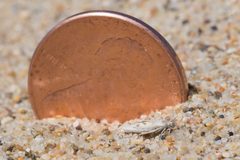
Small to mid-sized with teardrop-shaped profile when at rest. Body length approximately 4-5 mm based on field observations of common . Wings typically narrow and held tightly against the body, contributing to the streamlined silhouette. Coloration and pattern vary by ; many are inconspicuously colored.
Habitat
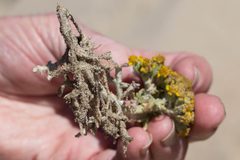
Diverse including open highland areas, prairie and grassland regions, and areas with composite shrubs. frequently found on flowers. Specific habitat associations vary by and region.
Distribution
Widespread across multiple continents. Documented from Europe (Denmark, Norway, Sweden), Africa (Namibia, South Africa, Kenya, Afrotropical region generally), Central Asia (Kazakhstan, Tajikistan, Turkey), and North America (United States including Vermont, western states).
Seasonality
activity varies by region. In Namibia and South Africa, specimens collected during November-December. In Central Asia, material collected during 2013-2014 expeditions suggests spring-summer activity. North American records indicate late summer-fall activity (September).
Life Cycle
Larval poorly known for most . Few determined; larvae of some species feed internally as leaf miners on Asteraceae. One species (Scythris mixaula) feeds on cactus. Developmental stages and largely undocumented across the .
Behavior
observed resting on flowers of composite shrubs during daylight hours. Display nervous disposition when disturbed, making observation and photography difficult. Strong capability suggested by wide geographic distributions of some .
Similar Taxa
- Xyloryctidae has been treated as Scythridinae within Xyloryctidae in some classifications; separation requires detailed morphological examination
- OecophoridaeXyloryctidae (including Scythridinae) has sometimes been placed within Oecophoridae; boundaries remain taxonomically contested
- Coleophoridae (case-bearers)Similar small size and gelechioid ; Coleophoridae larvae construct portable cases, distinguishing them ecologically
More Details
Taxonomic instability
-level classification remains unresolved. is accepted as a distinct family by Microleps.org and Photographers Group, but treated as Scythridinae ( of Xyloryctidae) by BugGuide.net and Tree of Life. This reflects broader uncertainty in Gelechioidea .
Undescribed diversity
Taxonomic knowledge is fragmentary. Expert estimates suggest most contain dozens of , yet only 4-6 described per genus. Many new species await formal description, with specimens known to for decades.
Research challenges
Small size (4-5 mm), nervous , and taxonomic complexity make these difficult to study. Field identification to is generally impossible without collection and dissection.
Sources and further reading
- BugGuide
- Wikipedia
- GBIF taxonomy match
- iNaturalist taxon
- NCBI Taxonomy
- Catalogue of Life
- Tiny little slivers of life | Beetles In The Bush
- Tiny little slivers of life | Beetles In The Bush
- Three new species of Scythrididae from central Turkey (Lepidoptera: Scythrididae)
- Notes on Scythrididae of Central Asia, with description of a new species (Lepidoptera: Scythrididae)
- New records of Scythrididae from Namibia, with descriptions of five new species (Lepidoptera: Scythrididae)
- Notes on Scythrididae of western South Africa and Namibia, with descriptions of eight new species (Lepidoptera: Scythrididae)