
Schinia jaguarina
Guenée, 1852
Jaguar Flower Moth
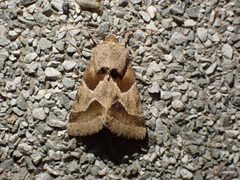
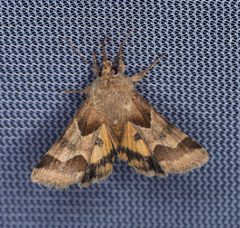
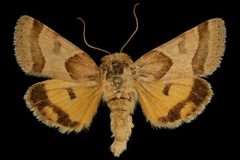
Schinia jaguarina, commonly known as the Jaguar Flower , is a noctuid moth first described by Achille Guenée in 1852. The species is distributed across the Great Plains and adjacent regions of North America, with records from Canada south through Mexico. are active primarily during summer months and are attracted to light. The larvae are specialized feeders on leguminous plants.
Pronunciation
How to pronounce Schinia jaguarina: //ˈskiːniə ˌdʒæɡjʊəˈraɪnə//
These audio files are automatically generated. While they are not always 100% accurate, they are a good starting point.
Identification
Distinguished from other Schinia by specific wing pattern elements and geographic distribution. The combination of small size (30 mm wingspan), Great Plains distribution, and association with legume flowers helps separate it from . Definitive identification may require examination of genitalia or comparison with reference specimens.
Images
Appearance
have a wingspan of approximately 30 mm. The exhibits the colorful wing patterns characteristic of the Schinia, which often aid in camouflage among flowers.
Habitat
Inhabits prairie and grassland , particularly areas supporting legume plants. Associated with shortgrass prairie and mixed-grass prairie . Found in open, sunny environments where Dalea and other leguminous plants occur.
Distribution
Great Plains of North America from Saskatchewan and Alberta south to Texas; eastward along the coast to Florida; westward in the south to Arizona. In Mexico, occurs south to Mexico City. Present in Canadian provinces of Alberta, Manitoba, and Saskatchewan.
Seasonality
are on wing from June to July. Observed at light traps during National Week events in late July in Colorado.
Diet
Larvae feed on Baptisia, Pediomelum rhombifolium, Psoralidium tenuiflorum, and Trifolium. have been observed visiting flowers of Dalea candida (White Prairie Clover) for nectar.
Host Associations
- Baptisia - larval food plant
- Pediomelum rhombifolium - larval food plant
- Psoralidium tenuiflorum - larval food plant
- Trifolium - larval food plant
- Dalea candida - nectar sourceobserved in Colorado
Life Cycle
Complete with , larval, pupal, and stages. Larvae feed on flowers and seed pods of legumes. Specific details of site and stage are not documented in available sources.
Behavior
are and attracted to ultraviolet and mercury vapor lights. Active during summer months. Larvae feed on reproductive structures of plants. Adults may rest on flowers during daylight hours, using coloration for .
Ecological Role
Larval herbivore on native leguminous plants; of Dalea and potentially other prairie flowers. Serves as prey for . Part of the diverse noctuid fauna supporting higher in prairie .
Human Relevance
Subject of interest for lepidopterists and enthusiasts; documented during National Moth Week citizen science events. No significant economic impact recorded; not considered a pest . Collected by researchers studying prairie moth diversity.
Similar Taxa
- Other Schinia speciesShared characteristics including small size, colorful wing patterns, and floral associations; distinguished by specific wing pattern details and plant preferences
- Flower moths in HeliothinaeSimilar as or flower visitors; Schinia jaguarina distinguished by activity pattern and specific geographic range
More Details
Taxonomic history
Originally described as Anthoecia jaguarina by Guenée in 1852 before transfer to Schinia
Citizen science documentation
Documented during National Week events at Cheyenne Mountain State Park, Colorado on July 28, 2018, and observed at light traps in Lyons, Colorado
Sources and further reading
- BugGuide
- Wikipedia
- GBIF taxonomy match
- iNaturalist taxon
- NCBI Taxonomy
- Catalogue of Life
- Bug Eric: White Prairie Clover: An Awesome Blossom
- Bug Eric: Remembering National Moth Week 2018
- Bug Eric: October 2018
- Bug Eric: Wasp Wednesday: Not Wasp VIII
- Catch a Glimpse of Caterpillars During National Moth Week
- 2013 Oklahoma Collecting Trip iReport | Beetles In The Bush