
Schinia meadi
Grote, 1873
Mead's Flower Moth
Schinia meadi is a small noctuid of western North America, described by Augustus Radcliffe Grote in 1873. have a wingspan of approximately 24 mm and are active from June to July. The belongs to the flower moth Schinia, whose larvae typically feed on flowers and seed pods of their plants.
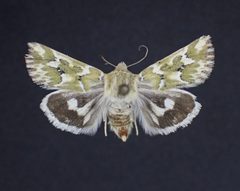
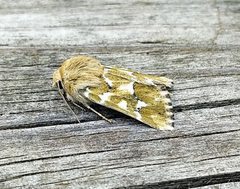
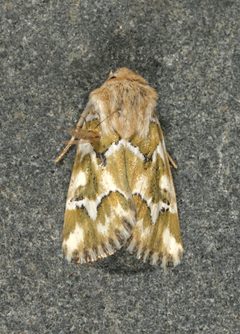
Pronunciation
How to pronounce Schinia meadi: //ˈskɪniə ˈmiːdaɪ//
These audio files are automatically generated. While they are not always 100% accurate, they are a good starting point.
Identification
Distinguished from other Schinia by geographic distribution in the western Great Plains and Rocky Mountain region. The small size (24 mm wingspan) and summer period (June-July) are consistent with the . Specific diagnostic features for separating S. meadi from are not documented in available sources.
Images
Habitat
Associated with prairie and grassland of the western Great Plains and intermountain west. Specific microhabitat preferences are not documented.
Distribution
Western North America: south-central Saskatchewan and central Alberta west to south-central Washington, south to Arizona and New Mexico. Canadian records include Alberta, Saskatchewan, and Manitoba.
Seasonality
are on wing from June to July, with exact timing varying by location.
Life Cycle
Complete with , larva, pupa, and stages. Larval plants and detailed are not documented in available sources.
Behavior
are and attracted to light. Like other Schinia , likely visits flowers for nectar.
Ecological Role
may function as when visiting flowers. Larval ecological role is undocumented.
Similar Taxa
- Other Schinia speciesNumerous in North America share similar size and general appearance; identification to level often requires examination of genitalia or knowledge of geographic range and plant associations.
More Details
Sources and further reading
- BugGuide
- Wikipedia
- GBIF taxonomy match
- iNaturalist taxon
- NCBI Taxonomy
- Catalogue of Life
- Bug Eric: Wasp Wednesday: Not Wasp VIII
- Catch a Glimpse of Caterpillars During National Moth Week
- Bug Eric: White Prairie Clover: An Awesome Blossom
- Bug Eric: Remembering National Moth Week 2018
- It’s a Mayfly…It’s a Moth…It’s Thyridopteryx | Beetles In The Bush
- Bug Eric: October 2018