
Provia
Barnes & McDunnough, 1910
Species Guides
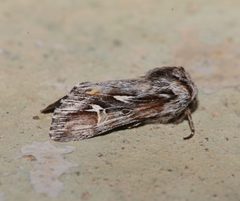
1Provia is a of in the Noctuidae, Noctuinae. The genus was established by Barnes and McDunnough in 1910. within this genus are part of the diverse owlet moth fauna of North America. The genus is not widely studied, and specific ecological details for most species remain poorly documented.
Pronunciation
How to pronounce Provia: /ˈproʊ.vi.ə/
These audio files are automatically generated. While they are not always 100% accurate, they are a good starting point.
Identification
Provia can be distinguished from related noctuine by genitalic characteristics, particularly male clasping apparatus and female bursa copulatrix structures. External shows typical Noctuinae features with dull coloration, stout bodies, and forewings that fold over the at rest. Specific identification to species level requires dissection and examination of genitalia.
Images
Distribution
North America. The occurs in regions where Barnes and McDunnough conducted their original work, primarily in the United States and southern Canada.
Similar Taxa
- LycophotiaSimilar external appearance in Noctuinae; distinguished by differences in male genitalia, particularly the shape of the valve and
- EuxoaOverlaps in distribution and general habitus; Euxoa typically has more pronounced wing markings and different genitalic structure
More Details
Etymology
The name Provia is unrelated to the Fujifilm photographic film of the same name, which was introduced decades later. The etymology of the genus name was not specified by Barnes and McDunnough in the original 1910 description.
Taxonomic history
Barnes and McDunnough described Provia in 1910 as part of their extensive work on North American Lepidoptera. The has remained relatively obscure, with few subsequent taxonomic revisions.
Sources and further reading
- BugGuide
- Wikipedia
- GBIF taxonomy match
- iNaturalist taxon
- NCBI Taxonomy
- Catalogue of Life
- Smartphone-based behaviour analysis for challenging behaviour in intellectual and developmental disabilities and autism spectrum disorder – Study protocol for the ProVIA trial
- ProVIA-Kids - outcomes of an uncontrolled study on smartphone-based behaviour analysis for challenging behaviour in children with intellectual and developmental disabilities or autism spectrum disorder
- Abstract 113: Burden of Risk Factors for Cervical Cancer among Women Living In East Africa: Analysis of the Latest Demographic Health Surveys Conducted between 2014 And 2017