
Lycophotia
Hübner, 1821
True Lover's Knot moth (for L. porphyrea)
Species Guides
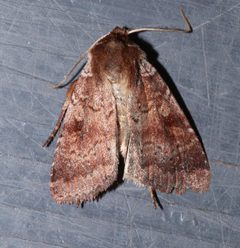
1- Lycophotia phyllophora(Lycophotia Moth)
Lycophotia is a of in the Noctuidae, established by Hübner in 1821. The genus contains several distributed across the western Palaearctic, with the best-known member being Lycophotia porphyrea (True Lover's Knot). Species in this genus are associated with moorland and heather-dominated vegetation. A high-quality assembly exists for L. porphyrea, providing detailed genetic information for this .
Pronunciation
How to pronounce Lycophotia: //ˌlaɪkoʊˈfoʊʃiə//
These audio files are automatically generated. While they are not always 100% accurate, they are a good starting point.
Identification
Members of Lycophotia can be recognized by cryptic forewing patterns that provide camouflage against heather vegetation. Lycophotia porphyrea specifically displays a distinctive double-looped forewing pattern resembling a knot, which gives the its . Accurate species-level identification within the requires examination of genitalia and wing pattern details.
Images
Habitat
Moorland dominated by heather vegetation (Calluna vulgaris and Erica cinerea). are found in open, acidic grasslands and heathland .
Distribution
Western Palaearctic region, with records from Denmark, Norway, Sweden, and broader distribution across northern and western Europe including the United Kingdom, Germany, France, Scandinavian countries, Poland, and the Baltic states. Lycophotia porphyrea occurs throughout Britain.
Seasonality
of Lycophotia porphyrea are on the wing between June and August. The likely follows similar seasonal patterns, though specific timing may vary by and latitude.
Diet
Larvae feed on heather (Calluna vulgaris and Erica cinerea); L. porphyrea has also been observed feeding on cultivated heathers.
Host Associations
- Calluna vulgaris - larval foodplant
- Erica cinerea - larval foodplant
Life Cycle
Lycophotia porphyrea overwinters as a fully grown larva before pupating in the ground. This pattern may be representative of other in the , though specific details for most species remain undocumented.
Behavior
display cryptic markings that camouflage them effectively when settled in heather vegetation. The forewing pattern of L. porphyrea resembles a knot with a double loop, aiding in concealment among plants.
Ecological Role
Larvae function as herbivores in heathland , consuming heather . Their specialized association with heather suggests a role in nutrient cycling within moorland .
Human Relevance
Lycophotia porphyrea has been subject to sequencing, with a published assembly of 542.40 megabases across 31 chromosomal pseudomolecules. This makes it a genomic reference for the and for Noctuidae research. No significant agricultural or economic impacts have been documented.
Similar Taxa
- Other Noctuinae genera in heathland habitatsSimilar cryptic brown coloration and moorland association; distinguished by specific forewing patterns and genitalia .
More Details
Genomic Resources
A -level assembly is available for Lycophotia porphyrea, comprising 542.40 Mb in 31 pseudomolecules including the Z , with 17,907 annotated protein-coding genes and a 15.39 kb mitochondrial genome.
Taxonomic Note
The contains at least six recognized : L. cissigma, L. erythrina, L. molothina, L. phyllophora, L. porphyrea, and L. velata. Detailed biological information is concentrated in L. porphyrea.