
Lycophotia phyllophora
Grote, 1874
Lycophotia Moth
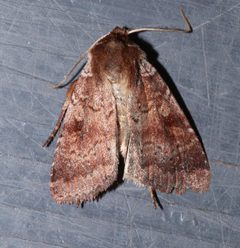
Lycophotia phyllophora is a noctuid with a wingspan of approximately 35 mm. are active during summer months across northeastern North America. Larvae feed on leaves of woody plants in several including Alnus, Betula, and Salix. The was first described by Grote in 1874 under the basionym Agrotis phyllophora.
Pronunciation
How to pronounce Lycophotia phyllophora: //laɪkəˈfəʊtiə ˌfɪləˈfɔːrə//
These audio files are automatically generated. While they are not always 100% accurate, they are a good starting point.
Identification
Distinguished from similar noctuid by geographic range and association with specific plants. Forewing pattern and size (35 mm wingspan) provide diagnostic characters. Examination of genitalia may be required for definitive identification from closely related .
Images
Appearance
Wingspan approximately 35 mm. have forewings with characteristic patterning typical of the Lycophotia. Specific coloration and markings require specimen examination.
Habitat
Associated with forested and shrubland supporting larval plants. Occurs in regions with Alnus, Betula, Vaccinium, and Salix vegetation.
Distribution
Southern and central Canada from New Brunswick and Nova Scotia west to western Ontario, Alberta, Manitoba, and Saskatchewan. Northern United States from Maine to Minnesota, south to Ohio, and along the Appalachians to western North Carolina.
Seasonality
on wing from June to August.
Diet
Larvae feed on leaves of Alnus (alders), Viburnum, Betula (birches), Vaccinium (blueberries, cranberries), Prunus (cherries, plums), Spiraea, and Salix (willows). diet not documented.
Host Associations
- Alnus - larval food plantleaves
- Viburnum - larval food plantleaves
- Betula - larval food plantleaves
- Vaccinium - larval food plantleaves
- Prunus - larval food plantleaves
- Spiraea - larval food plantleaves
- Salix - larval food plantleaves
Behavior
activity during summer months. Larval feeding occurs on foliage of woody plants.
Ecological Role
Larval herbivore on deciduous woody plants. Contribution to nutrient cycling and dynamics in forest and shrubland not quantified.
Human Relevance
No documented economic or agricultural significance. Subject of entomological study and citizen science observation.
Similar Taxa
- Other Lycophotia speciesSimilar forewing patterns and size; may require genitalia examination for separation
- Noctuinae moths with 35 mm wingspanOverlapping size range and general in northeastern North American fauna
More Details
Taxonomic history
Originally described as Agrotis phyllophora Grote, 1874. Transferred to Lycophotia.