
Feralia
Grote, 1874
Species Guides
5- Feralia comstocki(Comstock's Sallow)
- Feralia deceptiva(Deceptive Sallow)
- Feralia februalis
- Feralia jocosa(jocose sallow)
- Feralia major(Major Sallow)
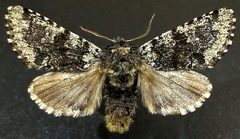
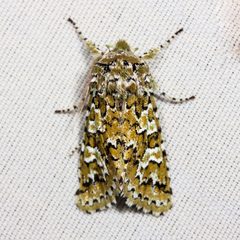
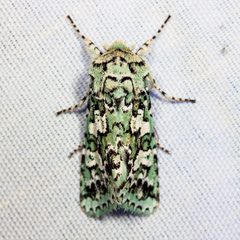
Feralia is a of noctuid established by Grote in 1874. within this genus are late-winter to early-spring fliers, , and readily attracted to lights. The genus includes Feralia februalis, a lichen-mimicking species narrowly to the West Coast of North America and dependent on oaks as a larval food plant.
Pronunciation
How to pronounce Feralia: //fəˈreɪliə//
These audio files are automatically generated. While they are not always 100% accurate, they are a good starting point.
Identification
Members of this are characterized by lichen-mimicking coloration, typically sea-green mottled patterns. Feralia februalis specifically exhibits this cryptic coloration, appearing similar to lichen-covered surfaces. The genus is distinguished from related noctuids by its late-winter period and West Coast distribution.
Images
Habitat
Oak woodlands and mixed hardwood forests with oaks at low elevations. In the Pacific Northwest, occurs in oak forests west of the Cascades. specificity tied to larval dependence on oaks as food plants.
Distribution
West Coast of North America. Range extends from the Columbia River south through western Oregon and California to the Mexican border, including the northern Sierra Nevada. Not yet recorded in Washington despite proximity to known Oregon . Distribution records also include Vermont and other US locations.
Seasonality
Late winter to early spring. Feralia februalis flies from February through early spring in the Pacific Northwest and California. activity pattern with strong attraction to artificial lights.
Diet
Larvae are food plant feeding on oaks (Quercus ). Specific feeding habits not documented.
Host Associations
- Quercus - larval food plantoak
Behavior
. come readily to lights. Larval stage specialized on oak foliage.
Ecological Role
Larval herbivore on oaks. Likely serves as prey for including birds, bats, and predators.
Human Relevance
Subject of entomological interest due to lichen-mimicking appearance and narrow distribution. Attracted to porch lights, facilitating observation and study.
Similar Taxa
- Other NoctuidaeDistinguished by late-winter period, West Coast , and lichen-mimicking coloration
More Details
Conservation note
Feralia februalis is considered management sensitive due to its dependence on oaks as larval food plants. loss or degradation of oak woodlands may impact .