
Acronicta brumosa
Guenée, 1852
Charred Dagger, charred dagger moth
Acronicta brumosa, commonly known as the charred dagger , is a noctuid moth native to North America. The exhibits a wingspan of approximately 38 mm. Larvae are specialized feeders on various Quercus (oak) species. The species was first described by Guenée in 1852.
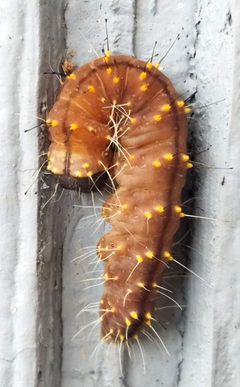
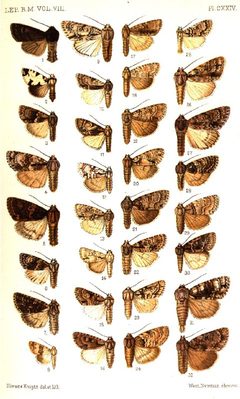
Pronunciation
How to pronounce Acronicta brumosa: /ˌækrəˈnɪktə bruˈmoʊsə/
These audio files are automatically generated. While they are not always 100% accurate, they are a good starting point.
Identification
The can be identified by its association with oak and its presence within the documented geographic range. The specific wing pattern distinguishing it from other Acronicta species is not detailed in available sources. Identification to level requires examination of or specialized literature.
Images
Habitat
Associated with oak-dominated environments, given the larval dependency on Quercus . Specific preferences for are not documented.
Distribution
Eastern and southern United States, ranging from New York south to Florida, westward through southern states to California, and northward at least to Utah.
Diet
Larvae feed on various Quercus (oak) . feeding habits are not documented.
Host Associations
- Quercus - larval food plantvarious oak
Life Cycle
Complete with , larva, pupa, and stages. Specific details on voltinism, stage, or developmental timing are not documented.
Behavior
are and attracted to light. Other behavioral traits are not documented.
Ecological Role
Larval stage functions as a folivore on oak trees, contributing to nutrient cycling in oak-dominated . The serves as prey for various and , though specific interactions are not documented.
Human Relevance
Not documented as an agricultural or forestry pest. The may be encountered during insect surveys or -watching activities.
Similar Taxa
- Other Acronicta speciesMany Acronicta share similar size, habits, and dagger-like wing markings. Specific wing pattern differences require detailed examination.
- Acronicta americanaShares , , and general ; A. americana has documented larval association with box elder rather than oak.
- Acronicta betulaeBirch dagger moth with similar structure and placement; differs in larval association with Betula .
More Details
Taxonomic History
Originally described as Acronycta brumosa by Guenée in 1852; later transferred to Acronicta.
Subspecies
Three are recognized: nominate A. b. brumosa, A. b. persuasa, and A. b. liturata. The geographic ranges and distinguishing characteristics of these subspecies are not detailed in available sources.