
Acronicta betulae
Riley, 1884
birch dagger moth, River Birch Dagger
Acronicta betulae, commonly known as the birch dagger or River Birch Dagger, is a noctuid moth native to eastern North America. are characterized by a distinctive wing appearance described as resembling two layers on the forewings. The exhibits periods in spring and late summer. Larvae are specialized feeders on birch leaves, with Betula nigra (river birch) documented as a primary .
Pronunciation
How to pronounce Acronicta betulae: /ˌækroʊˈnɪktə bɛˈtjuːliː/
These audio files are automatically generated. While they are not always 100% accurate, they are a good starting point.
Identification
The birch dagger can be distinguished from other Acronicta by its spring and late summer periods, its association with birch , and the distinctive layered appearance of the forewings. The specific epithet betulae refers to its birch-feeding larval habit, which can help narrow identification in areas where multiple dagger moth species occur. Confirmation may require examination of genitalia or larval association.
Images
Appearance
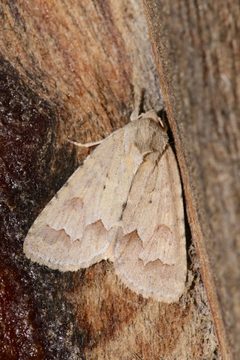
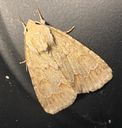
have a wingspan of 35–40 mm. The forewings appear strikingly layered, giving a two-toned or double-layered visual effect. Overall coloration and pattern details are consistent with the dagger Acronicta, though specific markings are subtle.
Habitat
Associated with deciduous forests and woodlands containing birch trees, particularly river birch (Betula nigra). Eastern Kansas represents the western fringe of its range, suggesting adaptability to marginally suitable where birch may be scarce or absent.
Distribution
Eastern United States from New Hampshire south to Florida, west to Texas, and north to Wisconsin. Eastern Kansas marks the approximate western limit of the documented range.
Seasonality
are active in two : March to May, and August to September. In eastern Kansas, adults have been observed in early spring (late March).
Diet
Larvae feed on leaves of birch (Betula), with Betula nigra (river birch) documented as a . The degree of host specificity beyond Betula nigra is uncertain; larvae may utilize other birch where available.
Host Associations
- Betula nigra - larval food plantprimary documented ; river birch
Life Cycle
Complete with two per year (). Larval stage feeds on birch foliage. and details are not documented in available sources.
Behavior
are and attracted to artificial light sources. They are active during early spring and late summer periods. Larvae are foliage feeders on birch.
Ecological Role
Larvae function as herbivores on birch trees, contributing to nutrient cycling and serving as potential prey for and . The ' presence indicates established birch .
Human Relevance
No documented economic or agricultural significance. Occasionally encountered by entomologists and naturalists during blacklighting surveys. The ' appearance at lights in areas lacking river birch raises questions about plant flexibility that may be relevant to ecological studies.
Similar Taxa
- Other Acronicta speciesShare general dagger ; distinguished by period, forewing structure, and larval association
- Acronicta americanaAmerican dagger moth is larger and more widespread; larvae have distinctive long black 'dagger' setae not reported for A. betulae
More Details
Range edge observations
Records from eastern Kansas (Leavenworth) extend the known range westward, though birch trees are reportedly absent at some locations, suggesting possible alternative or from source
Taxonomic note
Originally described as Acronycta betulae by Riley in 1884; subsequently transferred to Acronicta