
Dasychira grisefacta
(Dyar, 1911)
Grizzled Tussock Moth, Pine Tussock
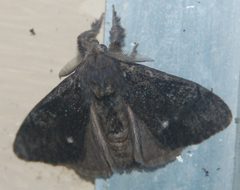
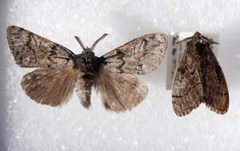
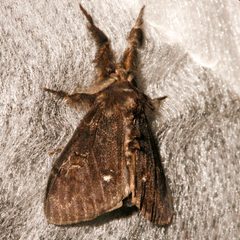
Dasychira grisefacta is a tussock in the Erebidae, first described by Harrison Gray Dyar Jr. in 1911. Males have functional wings with a wingspan of approximately 42 mm, while females are wingless. The is associated with coniferous forests and has a broad distribution across western North America. Larvae feed on several of conifers including Douglas-fir, hemlock, spruce, and pine.
Pronunciation
How to pronounce Dasychira grisefacta: /ˈdæsɪˌkaɪrə ˌɡrɪsɪˈfæktə/
These audio files are automatically generated. While they are not always 100% accurate, they are a good starting point.
Identification
Females can be identified by their wingless condition. Males are distinguished from similar Dasychira by genitalia examination; external characters require comparison with regional . The species occurs in coniferous where related tussock moths may be present.
Images
Habitat
Coniferous forests. Associated with trees including Douglas-fir, western hemlock, Engelmann spruce, white spruce, ponderosa pine, and pinyon pine.
Distribution
Western North America: Alberta, British Columbia, Montana, South Dakota, North Dakota, Oregon, Arizona, and New Mexico.
Diet
Larvae feed on Pseudotsuga menziesii (Douglas-fir), Tsuga heterophylla (western hemlock), Picea engelmannii (Engelmann spruce), Picea glauca (white spruce), Pinus ponderosa (ponderosa pine), and Pinus edulis (pinyon pine). feeding habits unknown.
Host Associations
- Pseudotsuga menziesii - larval food plantDouglas-fir
- Tsuga heterophylla - larval food plantWestern hemlock
- Picea engelmannii - larval food plantEngelmann spruce
- Picea glauca - larval food plantWhite spruce
- Pinus ponderosa - larval food plantPonderosa pine
- Pinus edulis - larval food plantPinyon pine
Life Cycle
Complete with , larva, pupa, and stages. Specific details of voltinism and stage not documented.
Ecological Role
Larval herbivore on coniferous trees. Specific ecological impacts not quantified.
Similar Taxa
- Dasychira vagansAnother western North American Dasychira with overlapping range and conifer-feeding larvae; requires genitalia examination for definitive separation.
- Dasychira plagiataEastern North American with similar ; geographic separation aids identification but males may require dissection for confirmation.
More Details
Subspecies
Two recognized: D. g. grisefacta (Dyar, 1911) and D. g. ella (Bryk, 1934). The latter was described from a more restricted geographic area.
Sexual dimorphism
The wingless condition of females is a notable trait within the , though not unique to this . This trait affects and mate-finding .