
Hypena deceptalis
Walker, 1859
Deceptive Snout, Deceptive Hypena, Deceptive Bomolocha Moth
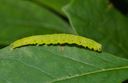
Hypena deceptalis is a in the Erebidae, first described by Francis Walker in 1859. It occurs across eastern and central North America, with active from April through August. The produces two annually. Larvae have been documented feeding on Tilia americana (American basswood), though the moth's range extends beyond that of its documented , indicating at least one additional larval food plant remains unidentified.
Pronunciation
How to pronounce Hypena deceptalis: //hʌɪˈpiː.nə dɪˈsɛp.tə.lɪs//
These audio files are automatically generated. While they are not always 100% accurate, they are a good starting point.
Identification
The can be distinguished from similar Hypena species by its specific geographic distribution and period. fly from April to August with two per year, which may help separate it from sympatric species with different . The combination of range (absent from much of the Gulf Coastal Plain) and association with Tilia americana may provide additional diagnostic context where plants are known.
Images
Appearance
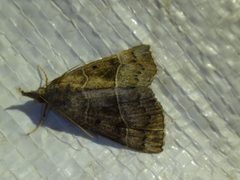
have a wingspan of 28–35 mm. The exhibits the characteristic snout-like projection of the Hypena, formed by elongated labial palps. Coloration and pattern details are not specified in available sources.
Habitat
Found in supporting its larval plants, including areas where Tilia americana occurs. The has been documented in both forested and more open environments, though specific habitat requirements beyond host plant presence are not detailed.
Distribution
North America from Manitoba to Quebec, south to Florida and Texas. Notably absent from much of the Gulf Coastal Plain. Records also include Alberta and Saskatchewan in Canada, and Vermont in the United States.
Seasonality
fly from April to August. Two occur per year.
Diet
Larvae feed on Tilia americana (American basswood). At least one additional larval plant is suspected but unidentified, as the occurs outside the range of Tilia americana. feeding habits are not documented.
Host Associations
- Tilia americana - larval food plantprimary documented
Life Cycle
Two per year. stage not specified in available sources. Larval development occurs on plants; pupal stage details are not documented.
Ecological Role
Larval herbivore on Tilia americana and at least one additional unidentified plant. Specific functions beyond herbivory are not documented.
Similar Taxa
- Hypena scabraSimilar , but differs in associations (clover, alfalfa, ragweed, strawberries, raspberries), geographic distribution (abundant east of the Rockies in open ), and (at least three per year, active from late February through summer)
Sources and further reading
- BugGuide
- Wikipedia
- GBIF taxonomy match
- iNaturalist taxon
- NCBI Taxonomy
- Catalogue of Life
- Soybean Insects: Mid-to-Late Season Pests (V8 to Maturity) - AgriLife Extension Entomology
- green cloverworm (Hypena scabra) - Entomology Today
- A Revision of Soybean Caterpillar Pest Information for U.S. Soybean
- Bug Eric: National Moth Week 2024 Recap from Kansas City
- Bug Eric: Blacklighting Already?
- caterpillar pests of soybean - Entomology Today