
Zanclognatha obscuripennis
Grote, 1872
Dark Zanclognatha, Dark Fan-foot
Zanclognatha obscuripennis is a small litter moth in the Erebidae, commonly known as the Dark Zanclognatha or Dark Fan-foot. It was described by Augustus Radcliffe Grote in 1872. The is widely distributed across eastern and central North America. are active primarily in spring and early summer, with two per year in most of its range and continuous breeding in Florida.
Pronunciation
How to pronounce Zanclognatha obscuripennis: //zæŋkloʊˈnæθə ɒbˌskjʊərɪˈpɛnɪs//
These audio files are automatically generated. While they are not always 100% accurate, they are a good starting point.
Identification
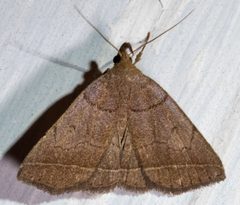
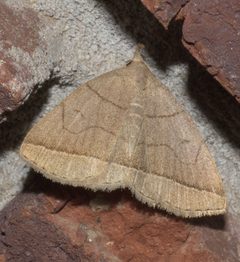
Distinguished from similar Zanclognatha by its darker, more uniform forewing coloration without strong contrasting lines or bands. Zanclognatha laetabilis and Z. jacchusalis typically show more distinct pale postmedial lines and warmer brown tones. Examination of genitalia may be required for definitive identification. The broad, rounded wing shape and forward-projecting labial palps help place specimens in the .
Images
Appearance
Small with wingspan of 22–32 mm. Forewings are relatively broad and rounded, typically dark brown to grayish-brown with variable patterning. Hindwings are paler. Labial palps are elongated and project forward, giving a 'snouted' appearance characteristic of the . Wing margins are slightly scalloped. Overall coloration is darker than many , consistent with the specific epithet 'obscuripennis' (dark-winged).
Habitat
Deciduous and mixed forests, woodlands, and areas with accumulated leaf litter. Associated with moist where dead leaves accumulate. Larval habitat is the leaf litter layer itself.
Distribution
Eastern and central North America: from Missouri and Texas eastward to the Atlantic coast, north to Quebec, and south throughout Florida.
Seasonality
active April through June. Two per year throughout most of range. Continuous reported in Florida, allowing year-round adult activity.
Diet
Larvae feed on detritus, specifically dead leaves.
Life Cycle
Two per year in most of range; continuous breeding in Florida. Larval stage develops in leaf litter, feeding on decaying plant material. occurs in litter or soil.
Behavior
are and attracted to light. Rest with wings folded tent-like over body or slightly spread, typical of litter moths. Larvae are ground-dwelling .
Ecological Role
Larvae function as decomposers, processing dead leaf material and contributing to nutrient cycling in forest .
Human Relevance
Occasionally encountered at porch lights and in surveys. No economic significance. Useful as an for forest quality and leaf litter dynamics.
Similar Taxa
- Zanclognatha laetabilisSimilar size and shape but typically shows more distinct pale lines on forewings and warmer brown coloration; often requires genitalia examination for separation
- Zanclognatha jacchusalisOverlapping range and ; usually has more contrasting wing pattern with clearer transverse lines
- Zanclognatha protumnusalisSimilar dark coloration but generally smaller with more pointed forewings
More Details
Nomenclature
The 'Dark Fan-foot' refers to the dark wings and the characteristic expanded labial palps that resemble a fan or snout. The epithet 'obscuripennis' directly translates to 'dark-winged'.
Subfamily placement
Placed in Herminiinae (litter moths), a group characterized by larvae that feed on dead plant material rather than living foliage.