
Zanclognatha jacchusalis
Walker, 1859
Wavy-lined Fan-foot, Wavy-lined Zanclognatha, Wavy-lined Litter Moth
Species Guides
2- Zanclognatha jacchusalis bryanti
- Zanclognatha jacchusalis lutalba(Canadian Fan-foot)
Zanclognatha jacchusalis is a litter moth in the Erebidae, distributed across eastern and central North America. are active from spring through late summer, with most producing one annually. The is associated with forest floor where larvae develop on decomposing plant material.
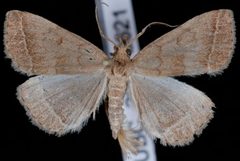
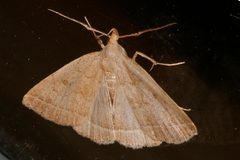
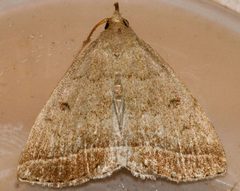
Pronunciation
How to pronounce Zanclognatha jacchusalis: //ˌzæŋkloʊˈɡnæθə ˌdʒækəˈseɪlɪs//
These audio files are automatically generated. While they are not always 100% accurate, they are a good starting point.
Identification
have a wingspan of 28–31 mm. The forewings display characteristic wavy transverse lines that give the its . The Zanclognatha can be distinguished from related litter moths by the fan-like projection of the labial palps, which extend forward from the .
Images
Habitat
Forest floor environments with accumulated leaf litter. Associated with deciduous woodland where dead leaves provide larval substrate.
Distribution
Eastern and central North America. Documented from Wisconsin to Maine, south to Georgia and Louisiana. Canadian records include Alberta, Manitoba, and Saskatchewan.
Seasonality
active April to September. Normally one per year; two generations occur in Missouri.
Diet
Larvae have been reared on dead oak leaves. Larval diet in nature is presumed to be detritus, though this has not been directly confirmed through field observation.
Life Cycle
Complete with , larva, pupa, and stages. Larvae develop in leaf litter. Normally ; in some southern .
Behavior
. are attracted to light. Larvae inhabit and feed within leaf litter layer.
Ecological Role
Contributes to decomposition of leaf litter in forest . Functions as a in early life stages.
Human Relevance
No significant economic or medical importance. Occasionally encountered by naturalists and enthusiasts at light traps.
Similar Taxa
- Zanclognatha laevigataOverlapping range and similar size; distinguished by forewing pattern details and genitalia
- Zanclognatha obscuripennisSimilar use; identification requires examination of wing pattern and body scaling