
Zanclognatha laevigata
Grote, 1872
Variable Zanclognatha, Variable Fan-foot
Zanclognatha laevigata is a litter moth in the Erebidae, described by Augustus Radcliffe Grote in 1872. It is widely distributed across eastern North America, from Manitoba to Nova Scotia and south to Florida and Missouri. The has a wingspan of approximately 30 mm and produces one annually. Larvae feed on detritus, particularly dead leaves.
Pronunciation
How to pronounce Zanclognatha laevigata: /ˌzæŋkloʊˈneɪθə leɪˈvɪɡətə/
These audio files are automatically generated. While they are not always 100% accurate, they are a good starting point.
Identification
Distinguished from other Zanclognatha by its variable wing patterning and geographic distribution. The Zanclognatha can be recognized by the fan-like projection of the labial palps. Specific identification to species level may require examination of genitalia or reference to regional keys, as wing patterns are variable.
Images
Appearance
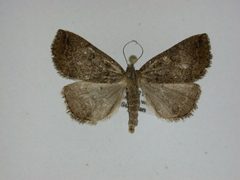
have a wingspan of approximately 30 mm. The exhibits variable wing patterning, consistent with its . Like other members of the Zanclognatha, it has the characteristic fan-footed appearance with elongated labial palps that project forward from the .
Habitat
Associated with forest floor litter and wooded where larval food resources (dead leaves and detritus) accumulate. Found in deciduous and mixed forests across its range.
Distribution
North America: Manitoba to Nova Scotia, south to Florida and Missouri. Present in Canada (Manitoba) and the United States (Vermont and throughout eastern and central regions).
Seasonality
One per year. active during the growing season; specific period varies by latitude but generally occurs in late spring through summer.
Diet
Larvae feed on detritus, including dead leaves. feeding habits not documented in available sources.
Life Cycle
(one per year). Complete with , larval, pupal, and stages. Larval stage spent in leaf litter feeding on detritus.
Behavior
are and attracted to light. Larval involves feeding on decomposing leaf litter.
Ecological Role
Decomposer; larvae contribute to nutrient cycling by breaking down dead plant material in forest floor .
Human Relevance
No documented economic or medical significance. Occasionally encountered by naturalists and enthusiasts at light traps.
Similar Taxa
- Other Zanclognatha speciesSimilar fan-footed and litter moth ; require detailed examination for separation
- Other Herminiinae mothsShare litter moth habits and general body form; wing pattern and palp structure aid distinction
More Details
Nomenclature
Originally described as Herminia laevigata by Grote in 1872; later transferred to Zanclognatha. The specific epithet 'laevigata' refers to smooth or polished appearance, though the variable wing patterns may obscure this characteristic.
Sources and further reading
- BugGuide
- Wikipedia
- GBIF taxonomy match
- iNaturalist taxon
- NCBI Taxonomy
- Catalogue of Life
- UC Davis Students Carry on Legacy of Walnut Twig Beetle Expert Steve Seybold | Bug Squad
- Graphisurus triangulifer in Missouri | Beetles In The Bush
- The perfectly polyphagous Chrysobothris purpureovittata | Beetles In The Bush
- Another new record for northwestern Oklahoma | Beetles In The Bush
- Four Canyon Preserve, Oklahoma | Beetles In The Bush