
Idia diminuendis
Barnes & McDunnough, 1918
Orange-spotted Idia Moth
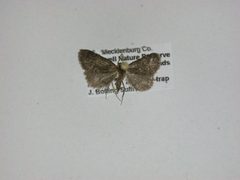
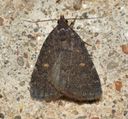
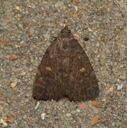
Idia diminuendis is a small litter moth in the Erebidae, first described in 1918. It occurs across eastern and central North America. The has two per year in most of its range and is attracted to light.
Pronunciation
How to pronounce Idia diminuendis: /ˈɪd.i.ə dɪˌmɪn.juˈɛn.dɪs/
These audio files are automatically generated. While they are not always 100% accurate, they are a good starting point.
Identification
Distinguished from other Idia by specific orange spotting pattern and geographic range. Exact diagnostic features relative to such as Idia americalis (American Idia) are not specified in available sources.
Images
Habitat
Associated with forested and wooded areas where leaf litter accumulates. Specific microhabitat preferences beyond detritus-rich environments are not documented.
Distribution
North America from Wisconsin to Nova Scotia, south to Florida and Texas.
Seasonality
Two per year in most of range; active during warmer months. Specific periods vary by latitude.
Diet
Larvae feed on detritus, including dead leaves.
Life Cycle
Two annually in majority of range. Complete with , larva, pupa, and stages. Larval development occurs in leaf litter.
Behavior
are attracted to light. activity pattern typical of Erebidae .
Ecological Role
Larvae function as , contributing to decomposition of leaf litter and nutrient cycling in forest .
Human Relevance
Occasionally encountered at artificial light sources; no significant economic or ecological impact documented. Sometimes observed during citizen science events such as bioblitzes.
Similar Taxa
- Idia americalisSimilar size, , and ; distinguished by pattern differences and lack of orange spotting characteristic of I. diminuendis
- Other Idia species members share litter moth and general ; require examination of wing pattern for separation
More Details
Taxonomic History
Originally described as Camptylochila diminuendis by Barnes and McDunnough in 1918; later transferred to Idia.
Research Needs
Detailed descriptions of and larval , precise diagnostic characters, and data are lacking in readily accessible literature.