
Euparthenos nubilis
Hübner, 1823
Locust Underwing
The locust underwing is the sole in its Euparthenos, a in the Erebidae. resemble underwing moths of genus Catocala in coloration and tree-trunk resting posture but are distinguished by unique wing patterning. The species serves as a documented for the digger wasp Ammophila nigricans. It is the only member of its genus, making it phylogenetically distinctive among underwing moths.
Pronunciation
How to pronounce Euparthenos nubilis: //juːˈpɑːrθənɒs ˈnjuːbɪlɪs//
These audio files are automatically generated. While they are not always 100% accurate, they are a good starting point.
Identification
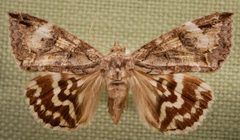
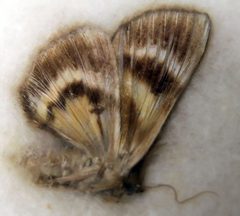
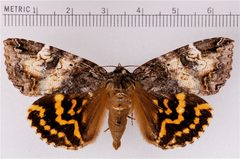
Distinguished from similar underwing (Catocala spp.) by the presence of four concentric black bands on the hindwing, versus one to three bands in Catocala. share the tree-trunk resting habit with Catocala . The Euparthenos is , so any moth matching this description belongs to this species.
Images
Appearance
resemble Catocala underwing moths in general coloration, pattern, and resting posture on tree trunks. The hindwing bears four concentric black bands, a diagnostic feature distinguishing it from Catocala which have one to three bands at most.
Distribution
Documented in North America with confirmed records from the eastern United States, including Vermont.
Diet
Larvae feed at night, resting stock still during daylight hours. Specific plants are not documented in available sources.
Life Cycle
Larval stage is known to be in feeding habits, with caterpillars remaining motionless during daylight. Complete details are not documented.
Behavior
rest on tree trunks in a posture similar to Catocala underwing moths. Larvae are cryptic, remaining motionless during daylight hours and feeding at night to avoid detection by .
Ecological Role
Larvae serve as prey for the digger wasp Ammophila nigricans, which provisions its nest with these caterpillars. The is part of the underwing guild that contributes to lepidopteran diversity and serves as food for specialized .
Similar Taxa
- Catocala spp.Similar coloration, pattern, and tree-trunk resting posture; distinguished by having one to three hindwing bands versus four in Euparthenos nubilis
More Details
Taxonomic Uniqueness
Euparthenos nubilis is the only in its , making it phylogenetically isolated from the more diverse Catocala underwing moths despite superficial similarities.
Predator-Prey Dynamics
The digger wasp Ammophila nigricans locates Euparthenos nubilis caterpillars primarily by touch rather than visual or movement cues, as the caterpillars remain motionless during the 's active foraging period.