
Drasteria edwardsii
Behr, 1870
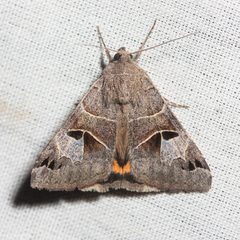
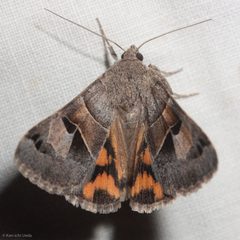
A in the Erebidae found along the Pacific coast of North America from Washington through Oregon to California. are active in late summer and fall, with bright coloration on the hindwings that is concealed at rest and flashed as a startle defense. The is named in honor of Henry Edwards, a prominent 19th-century entomologist.
Pronunciation
How to pronounce Drasteria edwardsii: /dræˈstɛr.i.ə ɛdˈwɔrd.zaɪ.i/
These audio files are automatically generated. While they are not always 100% accurate, they are a good starting point.
Identification
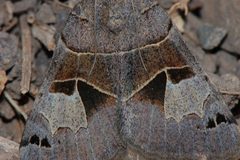
possess concealed bright orange or red hindwing patches that are flashed when disturbed, a defensive trait shared with related Drasteria . Forewings are cryptically patterned in gray and brown tones. The species is part of the 'underwing ' group within Erebinae, though not in the Catocala. Specific diagnostic characters separating it from congeneric species require examination of genitalia or detailed wing pattern analysis.
Images
Habitat
Associated with forested and woodland in the Pacific coastal region. Specific microhabitat preferences are not well documented.
Distribution
Pacific coastal North America: Washington, Oregon, and California.
Seasonality
active in late summer and fall; records from August through October based on related patterns in the region.
Behavior
exhibit a startle defense response: when disturbed, they flash brightly colored hindwings to surprise potential before taking . At rest, the cryptic forewings render the nearly invisible against bark or leaf litter substrates.
Ecological Role
may visit flowers for nectar; larvae likely function as herbivores, though specific plants are undocumented. The contributes to and serves as prey for bats, birds, and other .
Human Relevance
Occasionally encountered by enthusiasts and at light-based survey events. Not known to be of economic significance.
Similar Taxa
- Drasteria mirificaSympatric with similar startle defense using concealed bright hindwings; distinguished by differences in forewing pattern and hindwing coloration
- Catocala underwing mothsSimilar startle defense with bright hindwings; distinguished by different forewing venation and pattern, and placement in separate
Sources and further reading
- BugGuide
- GBIF taxonomy match
- iNaturalist taxon
- NCBI Taxonomy
- Catalogue of Life
- Bug Eric: National Moth Week Recap for Colorado Springs
- Bug Eric: Two Spiny-butts
- Bug Eric: Wasp Wednesday: Steniolia elegans
- Hymenoptera | Beetles In The Bush | Page 5
- "Rare" Butterfly Feeds on Oak Galls and Other Non-Nectar Sources
- Bug Eric: August 2010