
Caenurgia chloropha
Hübner, 1818
Vetch Looper Moth
Caenurgia chloropha, commonly known as the vetch looper , is a moth in the Erebidae. are active from spring through fall with multiple per year. The species is distributed across the southeastern United States, northern Mexico, and Cuba, with occasional strays reaching southern Ontario. Larvae feed on leguminous plants including vetch.
Pronunciation
How to pronounce Caenurgia chloropha: /kɛˈnɝɡiə klɔˈroʊfə/
These audio files are automatically generated. While they are not always 100% accurate, they are a good starting point.
Identification
The can be distinguished from related loopers by its association with legume plants and its geographic distribution in the southeastern United States. The specific wing patterns and coloration that separate it from congeneric species require examination of reference collections or specialized literature.
Images
Appearance
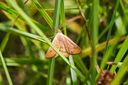
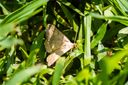
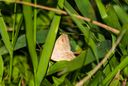
have a wingspan of 27–36 mm. Specific coloration and pattern details are not well documented in available sources.
Habitat
Found in areas where legumes grow, including open woodlands, fields, roadsides, and disturbed . The occupies a range of environments from the southeastern United States through northern Mexico.
Distribution
Southeastern United States, northern Mexico, and Cuba. Strays have been documented as far north as southern Ontario, Canada.
Seasonality
are on wing from April to October. Two or more occur per year. Full-grown larvae may be found from May onward.
Diet
Larvae feed on vetch (Vicia ) and other legumes (Fabaceae). feeding habits are not documented.
Host Associations
- Vicia - larval food plantvetch
- Fabaceae - larval food plantlegumes generally
Life Cycle
Two or more per year. are present from April through October. Larvae are present from May onward, with full-grown larvae found from May onward.
Behavior
are and attracted to light. Larvae exhibit looping locomotion typical of geometroid caterpillars, moving by arching the middle of the body and bringing the hind forward to meet the thoracic legs.
Ecological Role
Larval herbivore on leguminous plants. The contributes to nutrient cycling in herbaceous and shrubby where its plants occur. Specific interactions with , , or are not documented.
Human Relevance
The has minor significance as a potential pest of cultivated legumes, though it is not considered economically important. It may be encountered by gardeners and agricultural in the southeastern United States.
Similar Taxa
- Caenurgina erechteaSimilar (forage looper) and larval preferences; distinguished by wing pattern and geographic overlap in eastern North America
- Caenurgina crassiusculaCongeneric with similar and ; precise distinctions require examination of genitalia or detailed wing pattern analysis
More Details
Taxonomic history
Originally described as Xestia chloropha by Jacob Hübner in 1818, the was later transferred to the Caenurgia. The genus Caenurgia is part of the diverse Erebinae within the Erebidae, a group that has undergone significant taxonomic revision in recent decades.
Conservation status
Not evaluated by the IUCN. The appears to be common and widespread within its core range, with no documented threats.