
Catocala vidua
J.E. Smith, 1797
widow underwing
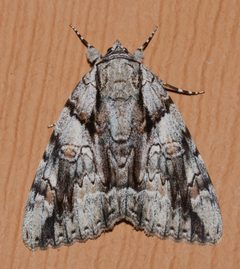
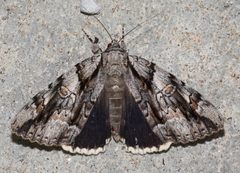
Catocala vidua, commonly known as the widow underwing, is a in the Erebidae. The was first described by James Edward Smith in 1797. It is a medium-large underwing moth with a wingspan of 70–80 mm. are active from August to October, with one per year. The larvae feed on several tree species including hickories, walnuts, oaks, black locust, and willow.

Pronunciation
How to pronounce Catocala vidua: //ˌkætəˈkeɪlə ˈvɪdjuə//
These audio files are automatically generated. While they are not always 100% accurate, they are a good starting point.
Identification
Distinguished from other Catocala by geographic range and . fly August to October, which helps separate from earlier-flying . Forewing pattern and hindwing coloration must be compared to similar species; precise diagnostic features require examination of pattern details not fully described in available sources. Larval plant associations may aid identification where multiple species co-occur.
Images
Appearance
Medium-large with wingspan of 70–80 mm. Forewings are cryptically colored, typically gray-brown with complex mottled patterns that provide camouflage against tree bark. Hindwings are concealed at rest; when exposed, they display bold coloration characteristic of the Catocala. The specific hindwing pattern for C. vidua is not detailed in available sources.
Habitat
Deciduous woodlands and forests. Associated with containing larval plants: hickory (Carya), walnut (Juglans), oak (Quercus), black locust (Robinia pseudoacacia), and willow (Salix). often found near tree trunks where they rest during daylight hours.
Distribution
Eastern and central North America. Recorded from southern Ontario, Maine, New Hampshire, and Connecticut south to Tennessee, Georgia, and Alabama; west to Texas and Oklahoma; north to Wisconsin.
Seasonality
on wing from August to October. One per year ().
Diet
Larvae feed on leaves of Carya illinoinensis (pecan), Carya ovata (shagbark hickory), Carya pallida (sand hickory), Juglans cinerea (butternut), Juglans nigra (black walnut), Quercus (oak ), Robinia pseudoacacia (black locust), and Salix (willow species). feeding habits not specified in available sources.
Host Associations
- Carya illinoinensis - larval food plantpecan
- Carya ovata - larval food plantshagbark hickory
- Carya pallida - larval food plantsand hickory
- Juglans cinerea - larval food plantbutternut
- Juglans nigra - larval food plantblack walnut
- Quercus - larval food plantoak
- Robinia pseudoacacia - larval food plantblack locust
- Salix - larval food plantwillow
Life Cycle
One per year. Larvae feed on plant foliage. presumably occurs in soil or leaf litter, though specific details not documented in available sources. emerge August to October.
Behavior
rest on tree trunks during daylight, with forewings folded over hindwings, concealing the brightly colored hindwings. When disturbed, adults may flash hindwings to startle before flying. This startle display is characteristic of the Catocala. Attracted to light sources at night.
Ecological Role
Larvae function as folivores, consuming leaves of hardwood trees. likely serve as prey for including birds, bats, and predatory insects. Specific ecological relationships beyond larval herbivory not documented in available sources.
Human Relevance
Subject of interest to lepidopterists and enthusiasts. Participates in National Moth Week events as part of citizen science documentation. No significant economic impact as pest or beneficial documented.
Similar Taxa
- Catocala concumbensSimilar size range and ; distinguished by forewing and hindwing pattern details
- Catocala verillianaOverlapping range and season; smaller size (noted in field observations)
- Catocala aholibahOverlapping range; larger size and different pattern (noted in field observations)
More Details
Etymology
The specific epithet 'vidua' is Latin for 'widow', giving rise to the 'widow underwing'. The name Catocala derives from Greek, meaning 'beautiful below', referring to the colorful hindwings concealed beneath cryptic forewings.
Sources and further reading
- BugGuide
- Wikipedia
- GBIF taxonomy match
- iNaturalist taxon
- NCBI Taxonomy
- Catalogue of Life
- A Gathering of Lepidopterists: Who's Who of the Butterfly, Moth Experts | Bug Squad
- Managing Insect and Mite Pests of Texas Corn - AgriLife Extension Entomology
- Got Moths? Celebrate National Moth Week and Global Citizen Science
- Bug Eric: National Moth Week Recap for Colorado Springs
- predation | Beetles In The Bush | Page 3
- Bug Eric: National Moth Week Recap, 2015