
Catocala relicta
Walker, 1858
White Underwing, Relict
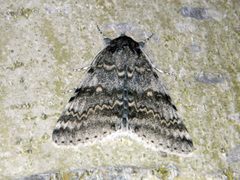
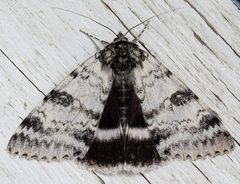
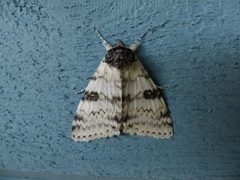
Catocala relicta, commonly known as the White Underwing or Relict, is a large underwing in the Erebidae. First described by Francis Walker in 1858, this is notable for its cryptic forewings that conceal brightly patterned hindwings. are active from July to September across a broad North American range spanning southern Canada to the southwestern United States. The larvae feed on multiple plants including birch, hickory, poplar, oak, and willow species.
Pronunciation
How to pronounce Catocala relicta: //kəˈtɒkələ rɪˈlɪktə//
These audio files are automatically generated. While they are not always 100% accurate, they are a good starting point.
Identification
Distinguished from other Catocala by the white hindwings with black banding. Similar species include other underwing moths with pale hindwings, but the specific pattern of black bands on white background is characteristic. Forewing pattern of mottled gray-brown with irregular dark markings aids in bark camouflage. The combination of large size (67–75 mm wingspan), white hindwings with black bands, and geographic range helps separate it from .
Images
Habitat
Found in wooded supporting its larval plants. Occurs in mixed forests with birch, hickory, poplar, oak, and willow. Habitat includes dry mixed conifer forest with oaks at higher elevations (observed at 7,000 feet in New Mexico). Also found in riparian areas with cottonwoods and wetland edges in prairie regions.
Distribution
Southern Canada from Newfoundland to Vancouver Island. In the United States, ranges south to Missouri and Arizona. Present in Alberta, Manitoba, Saskatchewan, and Vermont. Distribution records from GBIF confirm presence across North America with specific records from Canadian provinces and US states.
Seasonality
on wing from July to September in one per year, with exact timing varying by location. Activity period corresponds to summer and early autumn months across its range.
Diet
Larvae feed on leaves of Betula papyrifera (paper birch), Carya ovata (shagbark hickory), Populus alba (white poplar), Populus balsamifera (balsam poplar), Populus deltoides (eastern cottonwood), Populus nigra (black poplar), Populus tremuloides (quaking aspen), Quercus (oaks), and Salix species including Salix eriocephala (willow). feeding habits not documented.
Host Associations
- Betula papyrifera - larval paper birch
- Carya ovata - larval shagbark hickory
- Populus alba - larval white poplar
- Populus balsamifera - larval balsam poplar
- Populus deltoides - larval eastern cottonwood
- Populus nigra - larval black poplar
- Populus tremuloides - larval quaking aspen
- Quercus - larval oak
- Salix - larval willow
- Salix eriocephala - larval willow
Life Cycle
One per year. active July to September. Larval development occurs on plants with specific timing not documented. stage not confirmed in available sources.
Behavior
are and have been observed at light stations, though underwing moths typically remain on the periphery of lighted areas rather than landing directly on sheets. When disturbed, adults may flash their brightly colored hindwings as a startle defense before taking . Has been observed resting on tree trunks where cryptic forewings provide camouflage.
Ecological Role
Larvae function as folivores on deciduous trees and shrubs. may serve as prey for including bats and birds. Specific role as not documented. Contributes to nutrient cycling through larval feeding and adult .
Human Relevance
Subject of citizen science observation during National Week events. Attracted to artificial lights, making it accessible for moth enthusiasts and researchers. No documented economic importance as pest or beneficial . has been revised, with former subspecies C. r. elda now synonymized.
Similar Taxa
- Catocala epioneAnother underwing with pale hindwings, but C. epione has more grayish hindwings with different banding pattern and narrower black bands.
- Catocala concumbensUnderwing with yellow or orange hindwings rather than white, readily distinguished by hindwing color.
- Other Catocala speciesMost have orange, red, yellow, or blue hindwing markings rather than white with black bands; precise hindwing color pattern and forewing cryptic markings are diagnostic.
More Details
Taxonomic History
The former Catocala relicta elda, recorded from Oregon, has been synonymized with the nominate form based on subsequent taxonomic review.
Etymology
The name Catocala is derived from Greek meaning 'beautiful below', referring to the striking hindwings concealed beneath cryptic forewings. The specific epithet relicta refers to the as a 'relict' or surviving remnant.
Sources and further reading
- BugGuide
- Wikipedia
- GBIF taxonomy match
- iNaturalist taxon
- NCBI Taxonomy
- Catalogue of Life
- A Gathering of Lepidopterists: Who's Who of the Butterfly, Moth Experts | Bug Squad
- Got Moths? Celebrate National Moth Week and Global Citizen Science
- Bug Eric: National Moth Week Recap, 2015
- Bug Eric: National Moth Week Recap for Colorado Springs
- Bug Eric: National Moth Week 2024 Recap from Kansas City
- Bug Eric: New Mexico Night Bugs