
Cisthene plumbea
Stretch, 1885
Lead-colored Lichen Moth
Cisthene plumbea is a small tiger moth in the Erebidae, first described by Richard Harper Stretch in 1885. It is found in eastern North America, where larvae feed on lichen. The exhibits or trivoltine depending on latitude, with active from June through September.

Pronunciation
How to pronounce Cisthene plumbea: //ˈsɪsθɛni ˈplʌmbiə//
These audio files are automatically generated. While they are not always 100% accurate, they are a good starting point.
Identification
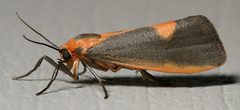
Distinguished from similar Cisthene by uniform lead-gray forewing coloration lacking strong contrasting bands or spots present in such as Cisthene packardii or Cisthene tenuifascia. Genitalia examination may be required for definitive identification from closely related species.
Images
Appearance
Small with wingspan of 17–21 mm. Forewings lead-gray to slate-colored with subtle patterning. Hindwings typically paler. Body relatively slender with .
Habitat
Associated with lichen-covered substrates including tree trunks, rocks, and woody debris in forested and semi-open environments.
Distribution
Eastern North America: southern New Jersey south to northern Florida, west to Wisconsin and Texas.
Seasonality
active June to September. Two per year throughout most of range; three generations annually in Louisiana.
Diet
Larvae feed on lichen.
Host Associations
- Lichen - larval food sourceSpecific lichen not documented
Life Cycle
in most of range (two per year); trivoltine in southern portion (Louisiana). Complete with , larval, pupal, and stages.
Ecological Role
Larval herbivore on lichen; contributes to nutrient cycling in forest . As a member of the tiger moth Arctiinae, likely possesses chemical defenses and may exhibit acoustic aposematism against bat , though this has been documented specifically in Cisthene martini rather than C. plumbea.
Human Relevance
No significant economic or medical importance. Occasionally encountered by naturalists and enthusiasts. Larval feeding on lichen causes no damage to cultivated plants.
Similar Taxa
- Cisthene packardiiSimilar size and ; distinguished by more contrasting wing pattern with distinct pale bands
- Cisthene tenuifasciaOverlapping range; has narrower, more sharply defined forewing markings
- Cisthene martini with documented acoustic aposematism; C. plumbea lacks the orange or yellow coloration of C. martini
More Details
Taxonomic note
Formerly placed in ; now classified in Erebidae following molecular phylogenetic revisions of Noctuoidea.
Research context
While acoustic aposematism has been demonstrated in the Cisthene martini, similar in C. plumbea remains unstudied and should not be assumed without direct evidence.