
Cisthene tenuifascia
Harvey, 1875
Thin-banded Lichen Moth, Three-banded Lichen Moth
Species Guides
1Cisthene tenuifascia, known as the thin-banded or three-banded lichen , is a small erebid moth described by Harvey in 1875. It ranges from Mexico through the southern United States from Arizona to Florida, with occasional strays northward. are active from March to October and have been recorded visiting flowers of Baccharis . The larvae feed on lichens and .
Pronunciation
How to pronounce Cisthene tenuifascia: //ˈsɪsθəni ˌtɛnjuˈfæʃə//
These audio files are automatically generated. While they are not always 100% accurate, they are a good starting point.
Identification
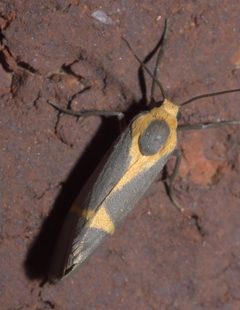
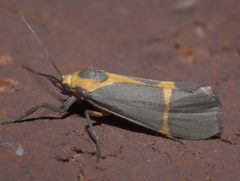
Distinguished by the yellow-orange stripe along the inner forewing margin. The small size (7–9 mm forewing length) and banded wing pattern separate it from other Cisthene , though precise differentiation from requires examination of band width and arrangement. The specific epithet 'tenuifascia' (thin-banded) suggests narrower banding than related species.
Images
Distribution
Mexico; United States: Arizona, Florida, North Carolina, Oklahoma, and intervening states. Strays recorded further north.
Seasonality
active March to October.
Diet
Larvae feed on lichens and . have been recorded sugaring on Baccharis sarothroides and Baccharis salicifolia.
Ecological Role
Larval feeding on lichens and contributes to nutrient cycling. flower visitation suggests potential pollination role for Baccharis .
Similar Taxa
- Cisthene martini in same ; research on acoustic aposematism in C. martini suggests C. tenuifascia may share similar anti-bat defenses given phylogenetic proximity, though this has not been directly tested.
- Other Cisthene speciesSimilar small size, lichen , and banded wing patterns; require careful examination of band width, color, and arrangement for separation.