
Cisthene
Walker, 1854
lichen moths
Species Guides
20- Cisthene angelus(angel lichen moth)
- Cisthene barnesii(Barnes' Lichen Moth)
- Cisthene conjuncta(White-streaked Lichen Moth)
- Cisthene coronado
- Cisthene deserta
- Cisthene dorsimacula
- Cisthene faustinula
- Cisthene juanita(Juanita's Lichen Moth)
- Cisthene kentuckiensis(Kentucky Lichen Moth)
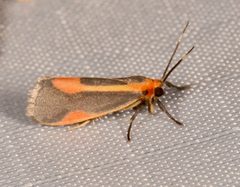
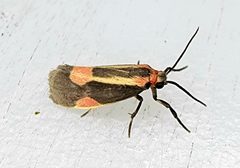
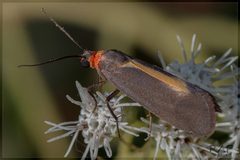
Cisthene is a of lichen moths in the Erebidae, erected by Francis Walker in 1854. in this genus are known to produce acoustic warning signals that deter bat , a termed acoustic aposematism. Research on Cisthene martini has demonstrated this phenomenon occurs in natural , not just laboratory settings. Some species exhibit reduced evasive behavior when approached by bats, suggesting reliance on sound-based defense.
Pronunciation
How to pronounce Cisthene: //ˈsɪs.θəniː//
These audio files are automatically generated. While they are not always 100% accurate, they are a good starting point.
Images
Distribution
Records from Vermont, United States; broader distribution across North America implied by occurrence data.
Behavior
in this produce ultrasonic clicks when approached by echolocating bats. Cisthene martini has been observed emitting these acoustic warning signals in natural as a defense mechanism. Some individuals exhibit reduced or absent evasive diving maneuvers when bats approach, suggesting variable reliance on acoustic aposematism versus escape.
More Details
Acoustic Aposematism Research
Cisthene martini was studied by researchers at Wake Forest University to confirm acoustic aposematism—the use of sound to warn of unpalatability—occurs in nature. This was the first field demonstration of the , previously known only from laboratory studies. The research also identified a 'nonchalance continuum' where some individuals rely on warning sounds rather than evasive .