
Cisthene packardii
(Grote, 1863)
Packard's Lichen Moth
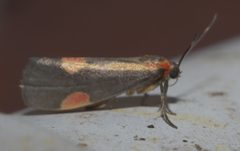
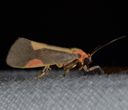
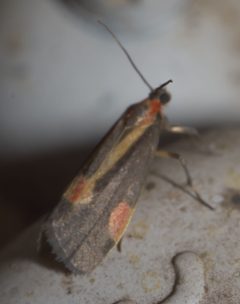
Cisthene packardii, commonly known as Packard's lichen , is a small erebid moth described by Grote in 1863. It occurs in the eastern and central United States, with active nearly year-round in southern portions of its range. The is associated with lichen-rich and its larvae feed specifically on and lichens.
Pronunciation
How to pronounce Cisthene packardii: //ˈsɪsθiːni pəˈkɑrdi.aɪ//
These audio files are automatically generated. While they are not always 100% accurate, they are a good starting point.
Identification
The small size (wingspan ~19 mm) and association with lichen may help distinguish this from other Cisthene . Specific diagnostic features for field identification are not documented in available sources.
Images
Habitat
In the northern part of its range, inhabits barrens and dry oak woodlands. In the southern part of its range, occurs in a variety of woodlands and scrub . The is consistently associated with environments supporting lichen growth.
Distribution
Eastern and central United States, ranging from New York south to Florida and from Missouri west to Texas.
Seasonality
are on wing from February to December in the southern portion of the range. Specific timing for northern is not documented.
Diet
Larvae feed on and lichens. feeding habits are not documented.
Host Associations
- Algae - larval food
- Lichens - larval food
Life Cycle
Complete with , larva, pupa, and stages. Larvae are known to reach approximately 12 mm at full growth. Specific details on egg, pupal stages, and time are not documented.
Ecological Role
Larval feeding on and lichens contributes to nutrient cycling in woodland and scrub . Specific ecological impacts have not been quantified.
Human Relevance
No significant documented economic or agricultural impact. The is not known to be a pest.
Similar Taxa
- Other Cisthene speciesSimilar size and general ; precise identification may require examination of genitalia or other subtle characters not specified in available sources.
More Details
Original description
First described by Augustus Radcliffe Grote in 1863, originally placed in the Hypoprepia.