
Cycnia
Hübner, 1818
Species Guides
3- Cycnia collaris(Unexpected Cycnia Moth)
- Cycnia oregonensis(Oregon Cycnia Moth)
- Cycnia tenera(dogbane tiger moth)
Cycnia is a of tiger moths in the Erebidae, erected by Jacob Hübner in 1818. The genus contains several North American , including the well-studied dogbane tiger (Cycnia tenera), which is known for its sophisticated anti-bat acoustic defenses. Species in this genus are typically associated with dogbane and milkweed plants, sequestering cardiac glycosides for chemical protection.
Pronunciation
How to pronounce Cycnia: //ˈsɪk.ni.ə//
These audio files are automatically generated. While they are not always 100% accurate, they are a good starting point.
Identification
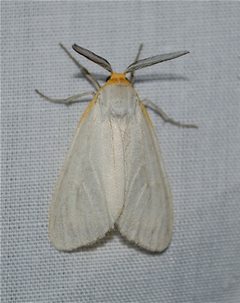
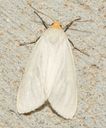
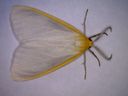
in this are generally white or pale in coloration with relatively simple wing patterns. Cycnia tenera, the most commonly encountered , is predominantly white with a faint pinkish or yellowish tinge. The genus can be distinguished from similar tiger moths by its overall pale coloration and specific antennal structure. Species-level identification requires examination of genitalia and geographic range.
Images
Habitat
in this inhabit open meadows, fields, and woodland edges where their plants (dogbane, milkweed) occur. They are found in temperate regions of North America.
Distribution
North America, with ranging across the United States and southern Canada. Specific distributions vary by species: C. tenera is widespread in the eastern and central United States; C. inopinatus occurs in western regions; C. oregonensis is restricted to the Pacific Northwest.
Host Associations
- Apocynum - plantdogbane
- Asclepias - plantmilkweed
Life Cycle
Complete with , larva, pupa, and stages. Larvae feed on plants and sequester cardiac glycosides, which provide chemical protection to adults.
Behavior
are and attracted to lights. The is notable for acoustic anti- defenses: at least C. tenera produces ultrasonic clicks using tymbal organs when detecting bat echolocation, timing these clicks to jam the bat's terminal attack phase.
Ecological Role
Larvae function as herbivores on dogbane and milkweed plants. serve as prey for bats and other , with their acoustic defenses representing a significant evolutionary response to bat pressure.
Similar Taxa
- SpilosomaSimilar pale tiger moth appearance, but Spilosoma typically has more distinct spotting and different plant associations.
- EuchaetesBoth are tiger moths with milkweed associations, but Euchaetes are generally more robust and have different larval coloration.
Sources and further reading
- BugGuide
- Wikipedia
- iNaturalist taxon
- NCBI Taxonomy
- Catalogue of Life
- Hooray for the red, white, and blue! Milkweed longhorned beetle, Tetraopes tetraophthalmus; dogbane tiger moth, Cycnia tenera; and familiar bluet, Enallagma civile — Bug of the Week
- Bug Eric: Moth Week and "Mothapalooza"
- Monday Moth – Trichaeta pterophorina | Beetles In The Bush
- Bug Eric: July 2011
- Archive — Bug of the Week
- Cephalic influences on a defensive behaviour in the dogbane tiger moth, Cycnia tenera
- The Closed-Loop Nature of the Tymbal Response in the Dogbane Tiger Moth, Cycnia tenera (Lepidoptera, Arctiidae)
- Jamming Bat Echolocation: the Dogbane Tiger Moth Cycnia Tenera Times Its Clicks to the Terminal Attack Calls of the Big Brown Bat Eptesicus Fuscus