
Cycnia oregonensis
Stretch
Oregon Cycnia Moth
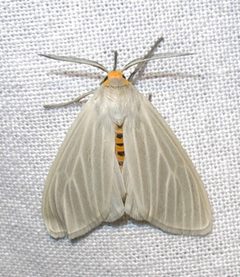
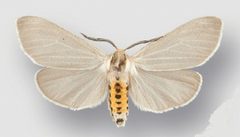
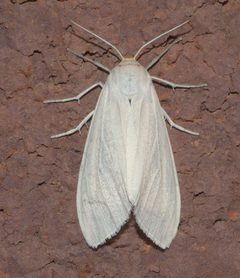
Cycnia oregonensis is a in the Erebidae, Arctiinae. are nearly uniform in color and pattern throughout most of their range, with forewings measuring 19–20 mm. The has been observed feeding on Apocynum species as larvae. A distinct , C. o. tristis, occurs in a small area near Olympia, Washington and is markedly grayer with reduced patterning.
Pronunciation
How to pronounce Cycnia oregonensis: /ˈsɪk.ni.ə ˌɔːr.ɪ.gəˈnɛn.sɪs/
These audio files are automatically generated. While they are not always 100% accurate, they are a good starting point.
Identification
Distinguished from similar Cycnia by its nearly uniform coloration throughout most of its range. The tristis, limited to the Olympia, Washington area, is the only known west of the Cascades in Washington and can be identified by its distinctly grayer, less patterned appearance compared to all other populations.
Images
Appearance
Forewing length 19–20 mm. Throughout most of its range, are nearly uniform in color and pattern. tristis is distinctly grayer and less patterned than other .
Distribution
Most of North America, from coast to coast, from the border with Mexico north to central Saskatchewan and Nova Scotia. tristis is restricted to a small area near Olympia, Washington.
Diet
Larvae feed on Apocynum .
Host Associations
- Apocynum - larval food plant
Similar Taxa
- Cycnia teneraSimilar and appearance; C. oregonensis distinguished by nearly uniform coloration and specific geographic range
More Details
Subspecies
Two recognized: Cycnia oregonensis oregonensis (widespread) and Cycnia oregonensis tristis Crabo, 2013 (restricted to Olympia, Washington area west of the Cascades). The latter is the only known of this in Washington west of the Cascade Mountains.
Sources and further reading
- BugGuide
- Wikipedia
- GBIF taxonomy match
- iNaturalist taxon
- NCBI Taxonomy
- Catalogue of Life
- Grasshoppers of Colorado
- Grasshoppers of Colorado
- Species Records and Accounts
- Hooray for the red, white, and blue! Milkweed longhorned beetle, Tetraopes tetraophthalmus; dogbane tiger moth, Cycnia tenera; and familiar bluet, Enallagma civile — Bug of the Week
- Bug Eric: Moth Week and "Mothapalooza"
- New Guide Offers Latest in Carrot Weevil Management