
Pseudosphex
Hübner, 1818
Species Guides
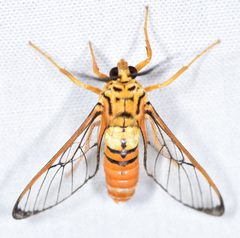
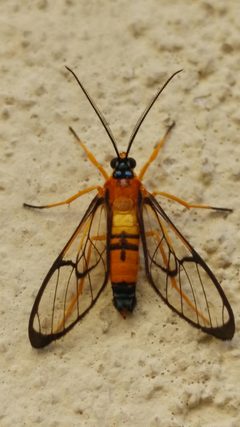
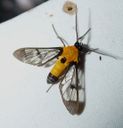
1Pseudosphex is a of tiger moths ( Arctiinae, Erebidae) established by Jacob Hübner in 1818. The genus comprises that exhibit exceptional mimicry of stinging Hymenoptera, particularly . These display near-perfect morphological and behavioral convergence with their models, including wasp-waisted bodies, yellow-black coloration, transparent wings held folded at rest, and wasp-like . Recent research proposes that this precise mimicry may serve not only to deter vertebrate but also to avoid by the wasps themselves, which may fail to recognize the moths as prey due to innate recognition mechanisms.
Pronunciation
How to pronounce Pseudosphex: //ˌsjuː.dəʊˈsfɛks//
These audio files are automatically generated. While they are not always 100% accurate, they are a good starting point.
Identification
Distinguishable from actual only at close range (approximately 18 inches or less); in , virtually indistinguishable from wasp models even to trained observers. Distinguished from other wasp-mimicking by the combination of transparent folded wings, wasp-waisted , and specific yellow-black pattern matching local wasp . From non-mimetic tiger moths by the radical departure from typical arctiine .
Images
Habitat
Associated with flowering vegetation; observed on flower- of Ageratum conyzoides and similar plants where models forage
Distribution
Neotropical region
Seasonality
Day-active (), concurrent with activity periods of models
Behavior
activity pattern matching that of models; forages on flowers in manner resembling wasp ; pattern convergent with wasp flight, contributing to effective mimicry
Ecological Role
through flower visitation; participant in mimicry rings involving multiple and other mimics
Human Relevance
Subject of significant research interest regarding the evolution and maintenance of perfect mimicry; provides evidence for expanded understanding of mimicry mechanisms beyond classical Batesian and Müllerian frameworks
Similar Taxa
- MacrocnemeAnother arctiine containing spider wasp mimics; differs in specific model associations and morphological details
- Sesiidae (clearwing moths)Also transparent-winged mimics; distinguished by different wing venation, lack of wasp-waist constriction, and typically more slender body form
- Hemaris (Sphingidae) mimics with transparent wings; distinguished by robust sphingid body form, different pattern, and rather than model
More Details
Evolutionary significance
Pseudosphex exemplify what has been termed 'perfect mimicry,' challenging classical assumptions that imperfect resemblance is sufficient for deception. The has been central to a new hypothesis proposing that precise mimicry may function primarily to avoid by the wasp models themselves rather than vertebrate predators, representing a form of 'masquerade' rather than classical .
Etymology
The generic name derives from Greek 'pseudo' (false) and 'Sphex,' a of thread-waisted wasps, directly referencing the deceptive resemblance.