
Haploa lecontei
Guérin-Méneville, 1832
Leconte's Haploa Moth, Leconte's haploa
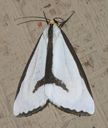
Haploa lecontei, commonly known as Leconte's Haploa , is a of tiger moth in the Erebidae. It occurs across eastern and central North America, from Nova Scotia south to Georgia and west to Manitoba and Arkansas. The species was first described by Guérin-Méneville in 1832. have a wingspan of 36–50 mm. The larvae feed on a variety of plants including apple, blackberry, peach, spearmint, and trembling aspen.
Pronunciation
How to pronounce Haploa lecontei: /ˈhæploʊ ləˈkɔntaɪ/
These audio files are automatically generated. While they are not always 100% accurate, they are a good starting point.
Identification
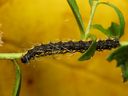
can be distinguished from similar Haploa by the specific arrangement of black markings on the white forewings. Haploa confusa (confused haploa ) is the most similar species; accurate identification often requires examination of genitalia or geographic context. The larvae are difficult to distinguish from other Haploa caterpillars without rearing to adulthood or molecular analysis. The combination of white forewings with black transverse band and yellow to orange hindwings separates this species from most other Arctiinae in its range.
Images
Habitat
Occurs in a variety of including deciduous forests, forest edges, open woodlands, and areas with its larval plants. The is associated with both natural and cultivated environments due to its broad host plant range.
Distribution
Eastern and central North America. Range extends from Nova Scotia south to Georgia, west to Manitoba through Arkansas.
Seasonality
are active from late spring through summer. Exact period varies by latitude, with northern flying later than southern populations. Larvae are present during the growing season when plants are available.
Diet
Larvae feed on various plants including apple (Malus spp.), blackberry (Rubus spp.), peach (Prunus persica), spearmint (Mentha spicata), and trembling aspen (Populus tremuloides). The breadth of this range suggests dietary flexibility, though specific preferences among these hosts have not been quantified. feeding habits are not documented.
Host Associations
- Malus spp. - larval food plantapple
- Rubus spp. - larval food plantblackberry
- Prunus persica - larval food plantpeach
- Mentha spicata - larval food plantspearmint
- Populus tremuloides - larval food planttrembling aspen
Life Cycle
Complete with , larva, pupa, and stages. Specific details of , number of per year, and stage are not documented in the provided sources.
Ecological Role
Larvae function as herbivores on woody and herbaceous plants. Their broad range suggests they are not keystone herbivores for any particular plant . are likely of flowers visited for nectar, though this has not been documented. The species serves as prey for various including birds, bats, and .
Human Relevance
Occasional pest of cultivated fruit trees (apple, peach) and berry crops (blackberry), though not considered a major agricultural pest. The is of interest to lepidopterists and naturalists due to its distinctive appearance. The honors John Lawrence LeConte, a prominent 19th-century American entomologist.
Similar Taxa
- Haploa confusaVery similar appearance in both and larval stages; historically confused with H. lecontei, hence the specific epithet 'confusa'. Accurate separation often requires genital dissection or geographic evidence.
- Haploa clymeneSimilar color pattern and larval ; distinguished by specific details of forewing markings and hindwing coloration.
- Haploa reversaShares the distinctive Haploa color pattern of white forewings with dark markings and colored hindwings; differs in specific arrangement of markings.
More Details
Taxonomic Note
This was originally described as Callimorpha lecontei Guérin-Méneville, 1832, and later transferred to the Haploa. Some sources cite the date as 1844, but 1832 is the original publication date.
Etymology
The specific epithet 'lecontei' and honor John Lawrence LeConte (1825–1883), one of the most prolific American entomologists of the 19th century, who described thousands of of beetles and other insects.