
Haploa confusa
Lyman, 1887
confused haploa, Lyman's haploa
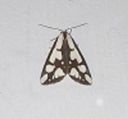
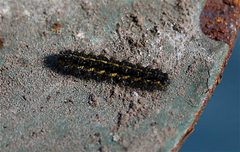
Haploa confusa is a North American tiger moth in the Erebidae, first described by H.H. Lyman in 1887. display distinctive cream-colored forewings with brown markings and nearly white hindwings. The caterpillar is strikingly patterned with black ground color, straight yellow and sub-dorsal stripes, and a broad lateral stripe. The has been documented feeding on hound's tongue (Cynoglossum officinale) and Penstemon digitalis during larval stages.

Pronunciation
How to pronounce Haploa confusa: /ˈhæploʊ ə ˈkɒnfjuːsə/
These audio files are automatically generated. While they are not always 100% accurate, they are a good starting point.
Identification
can be distinguished from other Haploa by the combination of cream forewings with brown markings and nearly white hindwings. The caterpillar's pattern of straight yellow stripes on black ground color with blue spotting separates it from similar tiger moth larvae; confirmation may require plant association or geographic context.
Images
Distribution
North America; documented in Canadian provinces of Alberta, Manitoba, and Saskatchewan; also present in Vermont and southwestern Missouri.
Seasonality
active in spring; caterpillars observed in early April in southwestern Missouri.
Diet
Caterpillars feed on hound's tongue (Cynoglossum officinale) and have been observed feeding on Penstemon digitalis (smooth beard-tongue).
Host Associations
- Cynoglossum officinale - larval food planthound's tongue
- Penstemon digitalis - larval food plantsmooth beard-tongue; observed in Missouri
Similar Taxa
- Haploa leconteiSimilar pattern; distinguished by specific wing markings and geographic range
- Haploa reversaOverlapping range; requires careful examination of forewing pattern and hindwing coloration
- Other Haploa species-level similarity in caterpillar striping pattern; specific identification often requires plant documentation or examination