
Virbia
Walker, 1854
Virbia Moths
Species Guides
12- Virbia aurantiaca(orange holomelina)
- Virbia costata
- Virbia fergusoni
- Virbia ferruginosa(rusty holomelina)
- Virbia fragilis
- Virbia immaculata(Plain-winged Virbia Moth)
- Virbia laeta(joyful holomelina)
- Virbia lamae(Bog Holomelina)
- Virbia marginata
Virbia is a of tiger moths in the Erebidae, established by Francis Walker in 1854. The genus was expanded through taxonomic revision when Holomelina was synonymized under Virbia, based on phylogenetic analysis showing Holomelina to be with respect to Virbia. The genus contains approximately 70 recognized distributed across the Americas, with 14 species documented north of Mexico. Biogeographic analysis indicates the ancestral area for Virbia was most likely the southwestern United States and Mexico.
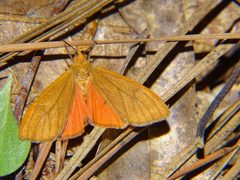
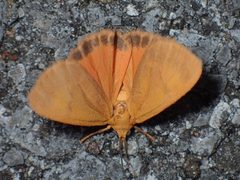
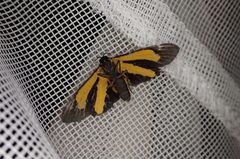
Pronunciation
How to pronounce Virbia: /ˈvɪr.bi.ə/
These audio files are automatically generated. While they are not always 100% accurate, they are a good starting point.
Identification
Diagnostic characters for Virbia include features of male genitalia: the shape and orientation of the basiphallus; the shape, orientation, and ornamentation of the ; and the pattern of of the eighth male sternite. These characters are particularly important for distinguishing species within smaller clades. The Virbia can be distinguished from related genera by the combination of these male abdominal and genitalic characters, though specific identification often requires examination of genitalia.
Images
Habitat
associations vary by ; some species appear to be habitat . Virbia lamae has been documented in bog habitats. Broader habitat preferences for the as a whole remain poorly characterized.
Distribution
Western USA and Canada; central USA and Canada; eastern USA and Canada; southwestern USA and Mexico; Central America; western South America; eastern and central South America; highlands of northern South America. The ancestral area for the is most likely the southwestern United States and Mexico. North of Mexico, 14 are recognized. The North American fauna north of Mexico represents a composite fauna resulting from at least two events from Mexico, while the South American fauna appears to have a single origin.
Human Relevance
Locality information from over 12,000 specimens representing 16 museum collections in the United States and Canada has been compiled into an electronic database available through the Diversity of Life Website, supporting research and identification efforts.
Similar Taxa
- HolomelinaFormerly recognized as a separate , but phylogenetic analysis showed it to be with respect to Virbia; now placed as junior synonym of Virbia.
More Details
Taxonomic History
The was erected by Francis Walker in 1854. A major revision by Zaspel and Weller (2006) analyzed 42 of 70 recognized and placed Holomelina as a junior synonym of Virbia based on maximum analysis of morphological characters. This synonymy was subsequently examined and accepted in the North American faunal review by Zaspel, Weller, and Cardé (2008). The study identified 58 characters (195 states) including newly discovered characters of male and female and genitalia.
Biogeographic Analysis
Biogeographic areas were scored from distribution information in a specimen-level database of over 12,000 specimens. Eight biogeographic areas were recognized for analysis. Weighted ancestral area analysis determined the ancestral area for Virbia was most likely the southwestern United States and Mexico.
Sources and further reading
- BugGuide
- Wikipedia
- GBIF taxonomy match
- iNaturalist taxon
- NCBI Taxonomy
- Catalogue of Life
- A Review of Virbia (Formerly Holomelina) of America North of Mexico (Arctiidae: Arctiinae: Arctinii)
- Review of generic limits of the tiger moth genera Virbia Walker and Holomelina Herrich-Schäffer (Lepidoptera: Arctiidae: Arctiinae) and their biogeography