
Virbia laeta
Guérin-Méneville, 1844
joyful holomelina, Joyful Virbia Moth
Pronunciation
How to pronounce Virbia laeta: /ˈvɪr.bi.ə ˈlaɪ.tə/
These audio files are automatically generated. While they are not always 100% accurate, they are a good starting point.
Identification
The can be distinguished from similar Virbia species by its specific geographic range and association with pine woodlands. The pronounced in forewing length (11 mm males, 17 mm females) may aid identification. Accurate identification likely requires examination of genitalia or comparison with reference specimens.
Images
Appearance
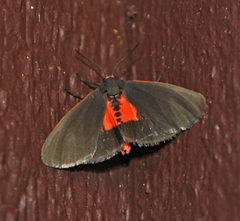
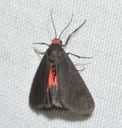
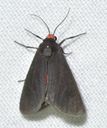
Small with forewings approximately 11 mm in males and 17 mm in females. The belongs to the Arctiinae, which typically includes moths with relatively broad wings and often bright coloration, though specific color patterns for V. laeta are not detailed in available sources.
Habitat
Pine woodlands. The shows a strong association with this specific forest type across its range.
Distribution
North America, from New Brunswick south to Florida and west to Minnesota and Texas. Distribution records also include the Canadian provinces of Alberta, Manitoba, and Saskatchewan, as well as Vermont in the United States.
Seasonality
period varies geographically: year-round in Louisiana (except December); two in Texas with adults in March and June; single generation in northern parts of the range with adults in June and July.
Diet
Larvae have been reared on dandelion (Taraxacum) and plantain (Plantago) .
Host Associations
- Taraxacum - larval food plantdandelion
- Plantago - larval food plantplantain
Life Cycle
Multiple per year in southern parts of the range (two in Texas), single generation in northern areas. Larval stage feeds on herbaceous plants. Specific details of and stage not documented.
Behavior
are and attracted to light. activity patterns vary by latitude, with extended or year-round activity in southern and restricted summer flight in northern populations.
Ecological Role
Larvae function as herbivores feeding on low-growing herbaceous plants in pine woodland understories. likely serve as prey for and may contribute to pollination.
Human Relevance
No significant documented interactions with humans. Not known to be an agricultural pest. Occasionally encountered by naturalists and enthusiasts in pine woodland .
Similar Taxa
- Other Virbia speciesVirbia is a of small tiger moths with similar ; accurate identification requires detailed examination or geographic and context.
More Details
Taxonomic note
Originally described as Lithosia laeta by Guérin-Méneville in 1844, later transferred to Virbia. Some sources cite 1832 as the publication year, but 1844 is the accepted date.