
Virbia immaculata
Reakirt, 1864
Plain-winged Virbia Moth, Immaculate Holomelina, Plain-winged Holomelina
Virbia immaculata is a in the Erebidae, Arctiinae. The was described by Tryon Reakirt in 1864. It is found across eastern and central North America, from the Atlantic coast west to Manitoba, with additional records from Iowa, Illinois, and Indiana. Larvae have been successfully reared on dandelion (Taraxacum) and plantain (Plantago) species.
Pronunciation
How to pronounce Virbia immaculata: /ˈvɪr.bi.ə ɪˌmæk.jəˈlæ.tə/
These audio files are automatically generated. While they are not always 100% accurate, they are a good starting point.
Identification
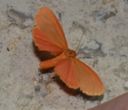
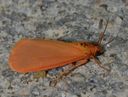
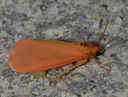
The specific epithet "immaculata" (meaning "spotless" or "unstained") suggests a relatively plain wing pattern compared to other Virbia , which often exhibit more prominent spotting or banding. However, specific diagnostic features distinguishing this species from are not documented in available sources.
Images
Distribution
Eastern North America, ranging from the Atlantic coast west to Manitoba. Documented occurrences include Iowa, Illinois, and Indiana. The appears to occupy a broad north-central to northeastern range within the continent.
Diet
Larvae feed on dandelion (Taraxacum ) and plantain (Plantago species). feeding habits are not documented.
Host Associations
- Taraxacum - larval food plantdandelion
- Plantago - larval food plantplantain
Similar Taxa
- Other Virbia speciesVirbia immaculata may be distinguished by its relatively plain, unmarked wings compared to spotted or banded , though this requires confirmation with original description or revisionary work.
More Details
Nomenclatural history
Originally described as Crocota immaculata by Reakirt in 1864, later transferred to the Virbia. The basionym reflects historical classification within a now-synonymized genus.