
Arctia alpina
(Quensel, 1802)
Arctic Tiger Moth
Arctia alpina is a tiger moth in the Erebidae, distributed across high-latitude and high-altitude regions of the Northern Hemisphere. The inhabits northern Scandinavia, Siberia, Alaska, northwestern Canada, and mountainous areas of southern Siberia and northern Mongolia. have a wingspan of 42–50 mm. Larvae feed on specific plants including dandelion, Vaccinium species, and dwarf willow. The species was transferred from the Acerbia to Arctia in a broader taxonomic revision of tiger moth genera.
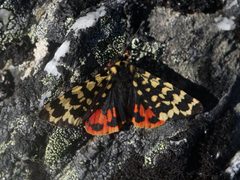
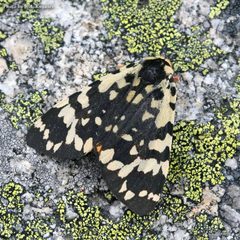
Pronunciation
How to pronounce Arctia alpina: //ˈɑɹk.ti.ə ælˈpaɪ.nə//
These audio files are automatically generated. While they are not always 100% accurate, they are a good starting point.
Identification
Distinguished from other Arctia by its restricted Arctic and alpine distribution. The combination of (high latitude or high elevation), moderate wingspan (42–50 mm), and geographic range separates it from similar tiger moths. Specific diagnostic morphological features are not documented in available sources. are distinguished by geographic origin: A. a. alpina (nominate), A. a. johanseni (Alaska/Yukon), A. a. severa (Kodar Mountains, Siberia), and A. a. siberica (Siberia).
Images
Appearance
have a wingspan of 42–50 mm. The exhibits the typical tiger moth pattern of bold contrasting coloration, though specific details of wing pattern are not documented in available sources.
Habitat
Arctic tundra, alpine meadows, and subarctic zones. Found in northern Scandinavia, northern Siberia, high mountains of southern Siberia and northern Mongolia, Alaska, and northwestern Canada. Occupies open at high latitudes or high elevations where plants occur.
Distribution
Northern Scandinavia, northern Siberia, high mountains of southern Siberia and northern Mongolia, Alaska, and northwestern Canada. Four recognized have restricted ranges: A. a. alpina in northern Europe; A. a. johanseni in Alaska and Yukon; A. a. severa in the Kodar Mountains of Siberia; A. a. siberica in Siberia.
Diet
Larvae feed on Taraxacum officinale (dandelion), Vaccinium (bilberries/blueberries), and Salix herbacea (dwarf willow). feeding habits are not documented.
Host Associations
- Taraxacum officinale - larval foodplant
- Vaccinium - larval foodplant level
- Salix herbacea - larval foodplant
Ecological Role
Larval herbivore in Arctic and alpine . Specific ecological functions (pollination, prey base, etc.) are not documented.
Similar Taxa
- Arctia virginalisSimilar tiger moth and placement, but restricted to western North America (California, Oregon, Washington) rather than Arctic-alpine regions; distinct geographic separation
- Arctia menetriesiiRelated tiger moth in same , but restricted to Finland and Russian Far East; not attracted to light, activity, and much rarer with different preferences
More Details
Taxonomic history
Originally described as Bombyx alpina by Quensel in 1802. Formerly placed in Acerbia, but transferred to Arctia along with from Acerbia, Pararctia, Parasemia, Platarctia, and Platyprepia in a generic revision.