
Apantesis phyllira
(Drury, 1773)
Phyllira Tiger Moth
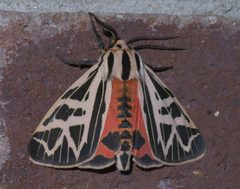
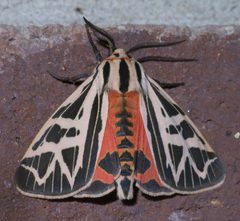
Apantesis phyllira, commonly known as the Phyllira Tiger Moth, is a of tiger moth in the Erebidae. First described by Dru Drury in 1773, this was formerly classified under the Grammia but was transferred to Apantesis along with related species. It occurs across a broad range of North America from eastern Canada to the southern United States and west to the Great Plains. The species is listed as endangered in Connecticut, reflecting conservation concerns in parts of its range.
Pronunciation
How to pronounce Apantesis phyllira: //əˈpænˌtiːsɪs ˈfɪlɪrə//
These audio files are automatically generated. While they are not always 100% accurate, they are a good starting point.
Identification
Formerly placed in Grammia, now distinguished from related by its placement in Apantesis. Specific diagnostic features separating it from congeneric species such as A. vittata or A. ornata are not detailed in available sources. Forewing length of approximately 17 mm provides a size reference.
Images
Appearance
have forewings approximately 17 mm in length. As a tiger moth, it likely exhibits the characteristic bold patterning typical of the group, though specific coloration details are not documented in the provided sources.
Habitat
Dry, open woodland and grassland. The has been documented in blacklighting surveys in Colorado front range including wooded areas with cliffs and mixed vegetation.
Distribution
North America from Quebec and New England south to Florida, and west to Texas, Colorado, and Alberta. Documented in Colorado during National Week surveys in Lyons (July 2018).
Seasonality
have been recorded in July during National Week events in Colorado. Specific period across the full range is not documented.
Diet
Larvae feed on various low-growing plants including corn (Zea mays), lupine (Lupinus spp.), and tobacco (Nicotiana spp.). feeding habits are not documented.
Host Associations
- Zea mays - larval food plantcorn
- Lupinus spp. - larval food plantlupine
- Nicotiana spp. - larval food planttobacco
Life Cycle
Complete with , larval, pupal, and stages. Specific details on number of per year, stage, or site are not documented.
Behavior
are attracted to ultraviolet light sources, as documented in blacklighting surveys. This is consistent with other tiger moths.
Ecological Role
Larval herbivore on low-growing plants. Specific ecological functions such as pollination or -prey relationships are not documented.
Human Relevance
Larval feeding on corn and tobacco indicates potential agricultural association, though economic impact is not quantified. Listed as endangered in Connecticut, indicating conservation concern in that state. Subject of citizen science documentation through National Week and iNaturalist.
Similar Taxa
- Apantesis vittataFormerly in Grammia, similar tiger moth patterning and preferences
- Apantesis ornataFormerly in Grammia, overlaps in distribution and
- Grammia speciesFormer classification; A. phyllira was moved from Grammia to Apantesis in taxonomic revision
More Details
Taxonomic History
This was formerly classified under the Grammia, along with species of Holarctia and Notarctia. These were all transferred to Apantesis based on phylogenetic studies. The basionym is Bombyx phyllira Drury, 1773.
Conservation Status
Listed as endangered in Connecticut, indicating decline or loss in that portion of its range. The remains relatively widespread across North America overall with 1,397 observations documented on iNaturalist.