
Porphyrosela
Braun, 1908
Species Guides
2- Porphyrosela desmodiella(Tentiform Bean Leafminer)
- Porphyrosela minuta
Porphyrosela is a of small leaf-mining in the Gracillariidae, Lithocolletinae. are distributed across multiple continents including the Neotropics, Australia, and Asia. The genus is characterized by larvae that create blotch mines on plant leaves, primarily in the family Fabaceae. At least 13 species are recognized, with several described from South America and others from Australia and Asia.
Pronunciation
How to pronounce Porphyrosela: /pɔːrˌfaɪrəˈsiːlə/
These audio files are automatically generated. While they are not always 100% accurate, they are a good starting point.
Identification
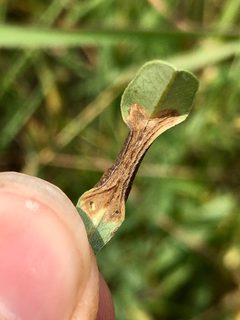
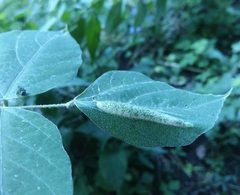
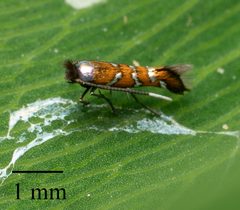
are very small microlepidoptera, making field observation difficult. Larval mines appear as white blotch mines on upper leaf surfaces. identification requires examination of genitalia and often dissection; adults can be sexed by observation of genital aperture position in pupal . has been used to distinguish species, with interspecific divergences of 8-11% documented.
Images
Habitat
Occupies diverse including the Cerrado biome in Brazil, parks and rural areas in southern Uruguay, and agricultural settings where legumes occur. Associated with ground cover vegetation and forage crops.
Distribution
Neotropical region (Brazil, Uruguay, Argentina); Australia; Vietnam; Bangladesh. The shows a disjunct distribution with in South America, Australia, and Southeast Asia.
Seasonality
In southern Uruguay, multivoltine with 7-9 between November and end of March. Activity coincides with spring and summer months in temperate regions.
Host Associations
- Arachis pintoi - forage peanut (Fabaceae); of P. arachisella in Brazil
- Trifolium repens - white clover (Fabaceae); of P. minuta in Uruguay
Life Cycle
At 25°C: stage approximately 3 days, larval stage approximately 9 days with five instars, pupal stage approximately 4 days; total development approximately 16 days. Early larval instars are flat and legless with lacerating mouthparts; later instars become cylindrical with developed legs and chewing mouthparts. Larvae do not remain exposed during development.
Behavior
Larvae are internal leaf miners, creating blotch mines on upper leaf surfaces. are difficult to observe in the field. In laboratory conditions, adults have been observed feeding on honey.
Ecological Role
Leaf-mining herbivore on Fabaceae. Damage to plants is generally not economically important, though mines reduce photosynthetic area. P. minuta is sometimes relatively abundant on white clover in southern Uruguay.
Human Relevance
Minor agricultural relevance as a on forage legumes including white clover and forage peanut. Not considered economically important despite occasional abundance. Subject of taxonomic and biological research due to novel discoveries in Brazil.
Similar Taxa
- PhyllonorycterBoth are Lithocolletinae leaf miners, but Phyllonorycter typically creates tentiform mines on lower leaf surfaces rather than upper-surface blotch mines
- CamerariaAlso Gracillariidae leaf miners, but Cameraria often create linear or serpentine mines rather than blotch mines, and differ in larval
More Details
Taxonomic history
First report of Lithocolletinae for Brazil was P. arachisella in 2022, making it the third Neotropical recognized for the . supports species-level distinctions with 8-11% divergence between P. arachisella and relatives from Australia, Vietnam, and Bangladesh.
Research significance
P. arachisella description represents the first lithocolletine gracillariid reported from Brazil, expanding known distribution of the in South America.
Sources and further reading
- BugGuide
- Wikipedia
- GBIF taxonomy match
- iNaturalist taxon
- NCBI Taxonomy
- Catalogue of Life
- Morphology and biology of Porphyrosela minuta Clarke 1953 (Lepidoptera: Gracillariidae, Lithocolletinae) in Uruguay
- Description of Porphyrosela arachisella sp. nov. (Lepidoptera: Gracillariidae), the first report of Lithocolletinae for Brazil