
Phyllonorycter olivaeformis
(Braun, 1908)
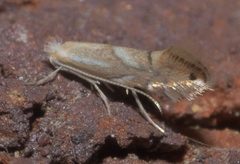
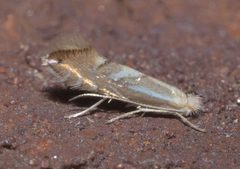
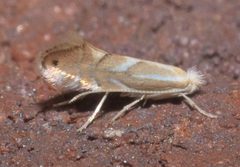
A micro- in the Gracillariidae with a wingspan of approximately 6.5 mm. The is known from the northeastern and midwestern United States. Larvae are leaf miners that feed on pecan (Carya illinoinensis).
Pronunciation
How to pronounce Phyllonorycter olivaeformis: /fɪˌlɒnəˈrɪktər oʊˌlɪveɪˈfɔːrmɪs/
These audio files are automatically generated. While they are not always 100% accurate, they are a good starting point.
Identification
A very small with wingspan around 6.5 mm. As a member of the Phyllonorycter, it likely exhibits the characteristic wing patterning of white or pale markings on a darker background typical of leaf blotch miner moths, though specific diagnostic features for this are not well documented in available sources.
Images
Habitat
Associated with pecan trees (Carya illinoinensis), the larval plant. have been collected at blacklights, suggesting activity.
Distribution
United States: recorded from Maine, New York, and Ohio. GBIF records also indicate presence in Ontario, Canada.
Diet
Larvae feed on leaves of Carya illinoinensis (pecan), mining the leaf tissue. feeding habits are unknown.
Host Associations
- Carya illinoinensis - larval pecan
Life Cycle
Larvae are leaf miners that feed within the leaves of their plant. Specific details regarding , , or number of per year are not documented.
Behavior
are attracted to blacklights. Larvae create leaf mines on pecan foliage.
Ecological Role
As a , larvae may cause minor damage to pecan foliage. levels and economic significance are not established.
Similar Taxa
- Other Phyllonorycter speciesMany Phyllonorycter are externally similar micro-; identification to species level typically requires examination of genitalia or larval association.
- Other Gracillariidae leaf minersSimilar size and general appearance; plant specificity and mine pattern help distinguish .