
Phyllonorycter manzanita
(Braun, 1925)
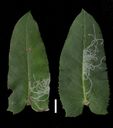
Phyllonorycter manzanita is a leaf-mining in the Gracillariidae. The is to California and was described by Braun in 1925. Larvae create characteristic mines in the leaves of manzanita species (Arctostaphylos), with documented including Arctostaphylos glauca and Arctostaphylos manzanita.
Pronunciation
How to pronounce Phyllonorycter manzanita: /ˌfɪloʊˈnɒrɪktər ˌmænzəˈniːtə/
These audio files are automatically generated. While they are not always 100% accurate, they are a good starting point.
Identification
Members of the Phyllonorycter are small with distinctive wing patterns featuring bands or spots of white or gold on darker backgrounds. -level identification requires examination of genitalia or . The specific epithet "manzanita" refers to its plant association rather than a morphological trait. Separation from other Phyllonorycter species in California requires knowledge of the genus.
Images
Habitat
Associated with manzanita (Arctostaphylos) stands, which occur in chaparral, woodland, and coastal scrub in California. The 's distribution is tied to the presence of its plants.
Distribution
Known from California, United States. GBIF records indicate presence in California and Arizona, though primary documentation is from California.
Diet
Larvae feed on Arctostaphylos glauca and Arctostaphylos manzanita. They mine the leaves of their plant, creating internal feeding tunnels.
Host Associations
- Arctostaphylos glauca - larval food plant
- Arctostaphylos manzanita - larval food plant
Life Cycle
Larvae are leaf miners. Complete details are not documented in available sources.
Behavior
Larvae mine leaves of plants. is not described in available sources.
Ecological Role
As a , larvae create feeding damage within leaf tissue of manzanita . Their role in broader function has not been studied.
Similar Taxa
- Other Phyllonorycter speciesMany Phyllonorycter are externally similar; reliable identification requires dissection or molecular methods. plant association with Arctostaphylos may help distinguish P. manzanita from sympatric species.
Sources and further reading
- BugGuide
- Wikipedia
- GBIF taxonomy match
- iNaturalist taxon
- Catalogue of Life
- Drum Roll...First Bumble Bee of the Year! | Bug Squad
- The Robbin Thorp Bumble Bee Memorial Contest | Bug Squad
- In Search of the First Bumble Bee of the Year | Bug Squad
- UC Davis Arboretum Is the Magical Place to Find the First-of-the-Year Bumble Bee | Bug Squad
- Who Will Find and Photograph the First Bumble Bee of the Year? | Bug Squad
- Who Won the UC Davis Bumble Bee Contest? | Bug Squad