
Macrosaccus neomexicanus
Davis, 2011
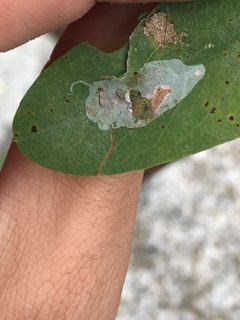
Macrosaccus neomexicanus is a minute leaf-mining in the Gracillariidae, described by Davis in 2011. The is to the southwestern United States, where it is known from Arizona and New Mexico. Its larvae are specialized feeders on New Mexico locust (Robinia neomexicana), creating distinctive tentiform leaf mines. The specific epithet references its plant rather than its geographic distribution.
Pronunciation
How to pronounce Macrosaccus neomexicanus: /ˌmæk.rəʊˈsæk.əs ˌniː.oʊˌmɛk.sɪˈkeɪ.nəs/
These audio files are automatically generated. While they are not always 100% accurate, they are a good starting point.
Identification
The combination of minute size (forewings 2.7–3.5 mm), geographic restriction to Arizona and New Mexico, and exclusive association with Robinia neomexicana distinguishes this from . The larval leaf mine is diagnostic: beginning as a short serpentine track that expands into an elongate-oval whitish blotch on the leaflet underside, eventually becoming strongly tentiform with silk deposition that causes the upper surface to roll over. Similar Macrosaccus species occur on different plants or in different regions.
Images
Appearance
are minute with forewings measuring 2.7–3.5 mm in length. The wings and body exhibit typical gracillariid proportions for the . Larvae are internal feeders within leaf tissue and are not typically observed externally.
Habitat
Associated with stands of its plant, New Mexico locust (Robinia neomexicana), which grows in canyon bottoms, riparian zones, and moist slopes in montane and foothill regions of the southwestern United States. The has been collected in the Chiricahua Mountains and other sky island ranges of southeastern Arizona.
Distribution
Southwestern United States: Arizona and New Mexico. Documented from the Chiricahua Mountains in Arizona and presumably from New Mexico based on plant distribution and the epithet.
Diet
Larvae feed exclusively on Robinia neomexicana (New Mexico locust, Fabaceae). do not feed; their mouthparts are reduced or non-functional as in most gracillariids.
Host Associations
- Robinia neomexicana - larval New Mexico locust; larvae mine leaves
Life Cycle
Larvae develop through feeding stages inside leaf mines. The mine progresses from an initial serpentine track to an elongate-oval blotch, then becomes tentiform as the larva deposits silk. occurs within the mine. Specific details regarding number of per year, -laying , and timing are not documented.
Behavior
Larvae are endophagous leaf miners that progressively modify their feeding site. As they develop, they lay down silk that contracts the mine into a tentiform structure, causing the leaf upper surface to roll over. This creates a sheltered microhabitat within the leaf.
Ecological Role
As a specialized herbivore, larvae act as a foliar on Robinia neomexicana, potentially affecting leaf function and plant . The contributes to the diversity of leaf-mining insects in southwestern riparian and montane . No information is available regarding or other trophic relationships.
Human Relevance
No direct economic or agricultural significance has been documented. The is not known to be a pest of cultivated plants. Its narrow specificity on a native tree species suggests limited potential for economic impact. The species was described relatively recently (2011), indicating ongoing documentation of regional biodiversity.
Similar Taxa
- Macrosaccus morrisellaAnother North American Macrosaccus , but associated with different Fabaceae including soybean and American hog peanut; occurs in more northern and eastern regions (Canada, Minnesota, northeastern United States). Larval mines are blotch-type but not described as becoming strongly tentiform with leaf rolling.
- Other Gracillariidae on RobiniaThe Macrosaccus appears to be the primary gracillariid lineage associated with Robinia; other leaf miners on this would likely be in different (e.g., Agromyzidae) with different mine morphologies.
More Details
Etymology
The specific epithet 'neomexicanus' is derived from the specific epithet of its plant, Robinia neomexicana, rather than from the state of New Mexico. This follows a pattern seen in other Macrosaccus where host plant associations are reflected in species names.
Taxonomic history
Described by Davis in 2011, making it a relatively recently described . The Macrosaccus was established to accommodate species formerly placed in related genera, with associations on Robinia being a defining characteristic.