
Scopula quadrilineata
(Packard, 1876)
Four-lined Wave Moth, four-lined wave
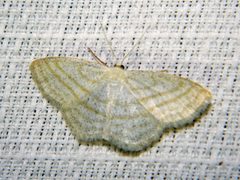
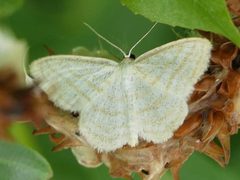
Scopula quadrilineata, commonly known as the four-lined wave, is a small in the Geometridae native to North America. The is characterized by its distinctive wing pattern featuring four lines, from which its is derived. It occurs across a broad range from eastern Canada through the Great Plains and south to the southeastern United States, with an isolated recorded in British Columbia.
Pronunciation
How to pronounce Scopula quadrilineata: //ˈskɒp.jʊ.lə ˌkwɒd.rɪ.lɪˈneɪ.ə.tə//
These audio files are automatically generated. While they are not always 100% accurate, they are a good starting point.
Identification
Distinguished from other Scopula by the presence of four distinct lines on the wings. The specific epithet quadrilineata directly references this diagnostic character. Differentiation from similar wave moths (Scopula spp.) requires examination of wing pattern details, particularly the number and arrangement of transverse lines. The species is smaller than many related geometrids, with a wingspan of only 20–22 mm.
Images
Appearance
Small with wingspan of 20–22 mm. Wings typically display four distinct lines that give the its . Pattern consists of wavy transverse lines across the forewings and hindwings. Coloration generally pale with darker line markings. Body relatively slender, consistent with typical geometrid .
Habitat
associations not explicitly documented in available sources. Based on distribution records, occupies a range of environments from maritime regions of Nova Scotia through continental interior to prairie provinces, suggesting adaptability to varied conditions. Likely associated with herbaceous vegetation given larval feeding habits typical of the .
Distribution
North America: Nova Scotia to Saskatchewan, south in the eastern United States to North Carolina. Disjunct record from British Columbia. Distribution spans approximately 3,000 km east-west across the continent, with the eastern continuous and the British Columbia record representing a western outlier.
Seasonality
activity period not explicitly documented in available sources. Based on related Scopula and general geometrid patterns in the region, likely active during spring and summer months. Specific requires further documentation.
Life Cycle
Complete with , larva, pupa, and stages. Larval stage details not documented; larvae of related Scopula typically feed on low-growing herbs and shrubs. Specific plants for S. quadrilineata not recorded in available literature.
Behavior
activity typical of geometrid moths. likely attracted to light. Specific behavioral observations not documented in available sources.
Ecological Role
Larval stage probably functions as herbivore on low vegetation. may serve as when visiting flowers. Specific ecological interactions not documented.
Human Relevance
No documented economic or agricultural significance. Not known to be a pest . Occasional interest from lepidopterists and naturalists due to its distinctive wing pattern.
Similar Taxa
- Scopula limboundataLarge lace-border moth with similar wing pattern and overlapping eastern North American distribution; distinguished by larger size and different line arrangement
- Scopula marginepunctataMullein Wave with similar and Palearctic distribution; distinguished by wing pattern details and geographic separation
- Other Scopula speciesNumerous share general wave appearance; precise identification requires examination of wing pattern details, particularly number and course of transverse lines
More Details
Nomenclatural history
Originally described as Acidalia quadrilineata by Packard in 1876, later transferred to Scopula. Basionym reflects historical classification within Geometridae.
Taxonomic note
belongs to large Scopula with over 700 described species worldwide; precise species limits within the genus often require detailed genitalic examination.
Sources and further reading
- BugGuide
- Wikipedia
- GBIF taxonomy match
- iNaturalist taxon
- NCBI Taxonomy
- Catalogue of Life
- Discovering Citizen Science and ecosystem balance in France - Buglife Blog - Buglife
- Buprestidae | Beetles In The Bush | Page 10
- Nudibranchs - marine molluscs are coming out of their shells - Buglife Blog - Buglife
- Buprestidae | Beetles In The Bush | Page 9
- jewel beetles | Beetles In The Bush | Page 9
- mimicry | Beetles In The Bush