
Scopula luteolata
(Hulst, 1880)
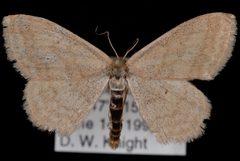
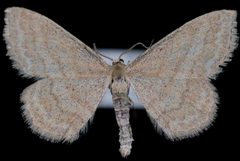
Scopula luteolata is a small in the Geometridae, Sterrhinae. It is restricted to western North America, occurring in montane from southwestern Canada through the western United States. The is associated with forest edge and opening habitats in mountainous regions. have a wingspan of 23–26 mm. Like other geometrid moths, its larvae are likely 'inchworm' type caterpillars, though specific plant associations remain poorly documented.
Pronunciation
How to pronounce Scopula luteolata: //ˈskɒpjʊlə luːtɪˈoʊlətə//
These audio files are automatically generated. While they are not always 100% accurate, they are a good starting point.
Identification
Small pale geometrid most readily identified by geographic range and . Within its western North American range, it may be distinguished from similar Scopula by its montane forest habitat preference and subtle wing patterning. The pale yellowish coloration (reflected in the name) and fine transverse wing lines are characteristic. Accurate identification typically requires examination of genitalia or reference to regional faunal treatments. It is not known to occur east of the Rocky Mountains, which aids in field identification.
Images
Habitat
Montane wooded and shrubby openings and edges in forests. Occurs in mountainous terrain with mixed coniferous and deciduous forest cover, typically at moderate to higher elevations where forest gaps and edges create suitable microhabitats.
Distribution
Western North America. In Canada: mountains of southwestern Alberta north to Banff, and west to Vancouver Island. In the United States: Arizona, California, Montana, Nevada, New Mexico, Oregon, Washington, and Wyoming. The is absent from the Great Plains and eastern North America.
Ecological Role
likely serve as of montane flowering plants. Larvae, as herbivores, contribute to nutrient cycling in forest . Like other geometrid moths, they are part of the supporting insectivorous birds, bats, and other in montane forest .
Human Relevance
No significant direct economic or agricultural impact. Of interest to lepidopterists and naturalists documenting western North American fauna. The contributes to biodiversity in montane forest valued for recreation and conservation.
Similar Taxa
- Scopula limboundataSimilar size and appearance, but S. limboundata occurs in eastern North America east of the Rocky Mountains, whereas S. luteolata is strictly western. The two are .
- Other Scopula speciesMany Scopula are superficially similar small pale geometrids; accurate identification often requires examination of genitalia or detailed comparison of wing pattern elements. S. luteolata is distinguished by its western montane distribution and specific wing pattern details.
More Details
Etymology
The specific epithet 'luteolata' derives from Latin 'luteolus' meaning yellowish or saffron-colored, presumably referring to the pale yellowish ground color of the wings.
Taxonomic history
Originally described as Cidaria luteolata by Hulst in 1880, later transferred to the Scopula. The was described from western North American material.
Conservation status
Not formally assessed; appears to be relatively widespread within its restricted western North American range, though montane forest may be vulnerable to climate change impacts.