
Eupithecia bryanti
Taylor, 1906
Bryant's Pug
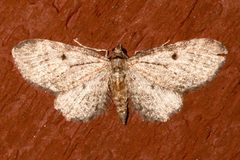
Eupithecia bryanti is a pug moth in the Geometridae, first described by Taylor in 1906. It is distributed across western North America from Alaska and Canada through the western United States to California. are active from spring through summer.
Pronunciation
How to pronounce Eupithecia bryanti: //juːpɪˈθiːʃə ˈbraɪənti//
These audio files are automatically generated. While they are not always 100% accurate, they are a good starting point.
Identification
Members of the Eupithecia (pugs) are recognized by their narrow wings and characteristic resting posture with wings held flat and slightly overlapping. Specific identification of E. bryanti requires examination of genitalia or detailed wing pattern analysis, as Eupithecia are notoriously difficult to distinguish visually.
Images
Distribution
Alaska, Yukon Territory, Alberta, British Columbia, Washington, Oregon, Montana, Idaho, Wyoming, Utah, and California.
Seasonality
have been recorded on wing from April to August.
Similar Taxa
- Eupithecia miserulataAnother common western North American pug moth with overlapping range and similar appearance; genitalia examination required for reliable separation.
- Eupithecia annulataShares western distribution and narrow-winged pug ; distinguished by subtle wing pattern differences.
More Details
Taxonomic Note
Eupithecia is a large with over 400 described in North America alone. Many species, including E. bryanti, are poorly known biologically and can only be reliably identified by genitalia dissection.