
Eupithecia annulata
(Hulst, 1896)
larch pug moth
Eupithecia annulata, commonly known as the larch pug , is a small geometrid moth first described by George Duryea Hulst in 1896. The is notable for its broad distribution across North America, ranging from the Yukon to Newfoundland and south to California and Colorado. are active in spring, with larvae feeding on a diverse array of coniferous and some deciduous plants including larch, spruce, fir, Douglas-fir, and western red cedar.
Pronunciation
How to pronounce Eupithecia annulata: //juːˌpɪˈθiːʃiə ˌænjuˈleɪtə//
These audio files are automatically generated. While they are not always 100% accurate, they are a good starting point.
Identification
Eupithecia annulata can be recognized by its small size (wingspan ~19 mm), narrow wings held flat at rest, and the characteristic 'pug moth' silhouette typical of the . Definitive identification to level within Eupithecia typically requires examination of genitalic structures, as many species are externally similar. The species is most readily distinguished from other Eupithecia by geographic range and plant associations in conjunction with (April–June).
Images
Appearance
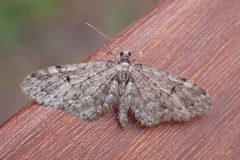
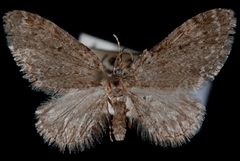
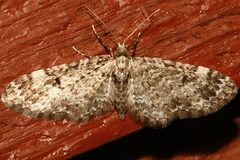
have a wingspan of approximately 19 mm. The exhibits the typical narrow-winged, slender-bodied form characteristic of pug moths in the Eupithecia. Wing patterning consists of muted gray-brown tones with fine transverse lines and small discal spots. The resting posture is distinctive, with wings held flat and slightly overlapping, creating a triangular silhouette. Full-grown larvae reach approximately 22 mm in length.
Habitat
Found in coniferous and mixed forests where larval plants occur. include forests, montane forests, and western coastal forests. The occurs across a broad elevational range, from lowland valleys to subalpine zones, reflecting the wide distribution of its coniferous hosts.
Distribution
North America: British Columbia north to Yukon, east to Newfoundland and Labrador, and south to California and Colorado. Distribution records confirm presence in Alberta, Manitoba, and Saskatchewan in Canada, and Vermont in the United States.
Seasonality
are on wing from April to June. This spring period coincides with the availability of fresh foliage on coniferous plants for larval development.
Diet
Larvae feed on foliage of numerous conifer : Pseudotsuga menziesii (Douglas-fir), Picea mariana (black spruce), Picea engelmannii (Engelmann spruce), Picea glauca (white spruce), Tsuga mertensiana (mountain hemlock), Tsuga heterophylla (western hemlock), Abies amabilis (Pacific silver fir), Abies grandis (grand fir), Abies lasiocarpa (subalpine fir), Larix occidentalis (western larch), Pinus monticola (western white pine), Pinus contorta var. latifolia (lodgepole pine), Thuja plicata (western red cedar), and Quercus garryana (Oregon white oak).
Host Associations
- Pseudotsuga menziesii - larval food plantDouglas-fir
- Picea mariana - larval food plantBlack spruce
- Picea engelmannii - larval food plantEngelmann spruce
- Picea glauca - larval food plantWhite spruce
- Tsuga mertensiana - larval food plantMountain hemlock
- Tsuga heterophylla - larval food plantWestern hemlock
- Abies amabilis - larval food plantPacific silver fir
- Abies grandis - larval food plantGrand fir
- Abies lasiocarpa - larval food plantSubalpine fir
- Larix occidentalis - larval food plantWestern larch; source of
- Pinus monticola - larval food plantWestern white pine
- Pinus contorta var. latifolia - larval food plantLodgepole pine
- Thuja plicata - larval food plantWestern red cedar
- Quercus garryana - larval food plantOregon white oak; only deciduous recorded
Life Cycle
Complete with four stages: , larva, pupa, and . Larvae are external feeders on conifer foliage. Full-grown larvae reach approximately 22 mm. occurs in soil or leaf litter. Adults emerge in spring (April–June). The likely overwinters as pupae, though this has not been explicitly documented.
Behavior
are and attracted to light. Larvae are external foliage feeders. The has been documented visiting apple flowers at night, contributing to nocturnal pollination services in agricultural settings.
Ecological Role
Larval herbivore on coniferous trees; contributes to nutrient cycling through foliage consumption. function as , with documented visitation to apple flowers and likely other flowering plants. Serves as prey for various including birds, bats, and spiders.
Human Relevance
Minor forestry significance as a conifer defoliator, though not considered a major pest. Documented as a of apple crops in Arkansas, suggesting potential beneficial role in agriculture. The illustrates the dual nature of insect 'pest' classifications—larvae may damage trees while provide pollination services.
Similar Taxa
- Other Eupithecia speciesMany pug moths are externally similar and require genitalic examination for definitive identification; E. annulata distinguished by range, , and associations
- Eupithecia lariciataAlso associated with larch; may overlap in range and requires careful examination to distinguish
More Details
Nocturnal pollination
A 2021 study in the Journal of Economic Entomology documented Eupithecia annulata visiting apple flowers at night, demonstrating that this contributes to pollination services in agricultural systems. This finding highlights that traditionally classified as 'pests' may provide services as .
Host plant diversity
The exhibits exceptional breadth within conifers, utilizing at least 13 species across 7 in Pinaceae, Cupressaceae, and Fagaceae. This polyphagy likely contributes to its broad geographic distribution across North America.
Taxonomic history
First described by George Duryea Hulst in 1896, a prominent early American lepidopterist who described numerous North American in the late 19th century.
Sources and further reading
- BugGuide
- Wikipedia
- GBIF taxonomy match
- iNaturalist taxon
- NCBI Taxonomy
- Catalogue of Life
- P.M. Pollinators: Study Shines Light on Nocturnal Insects' Role in Apple Production
- Bug Eric: New Mexico Night Bugs
- Lepidoptera | Beetles In The Bush | Page 10
- Quiz Yourself: 2020 Entomology Games Questions
- May | 2010 | Beetles In The Bush | Page 2